
O que pode um corpo?
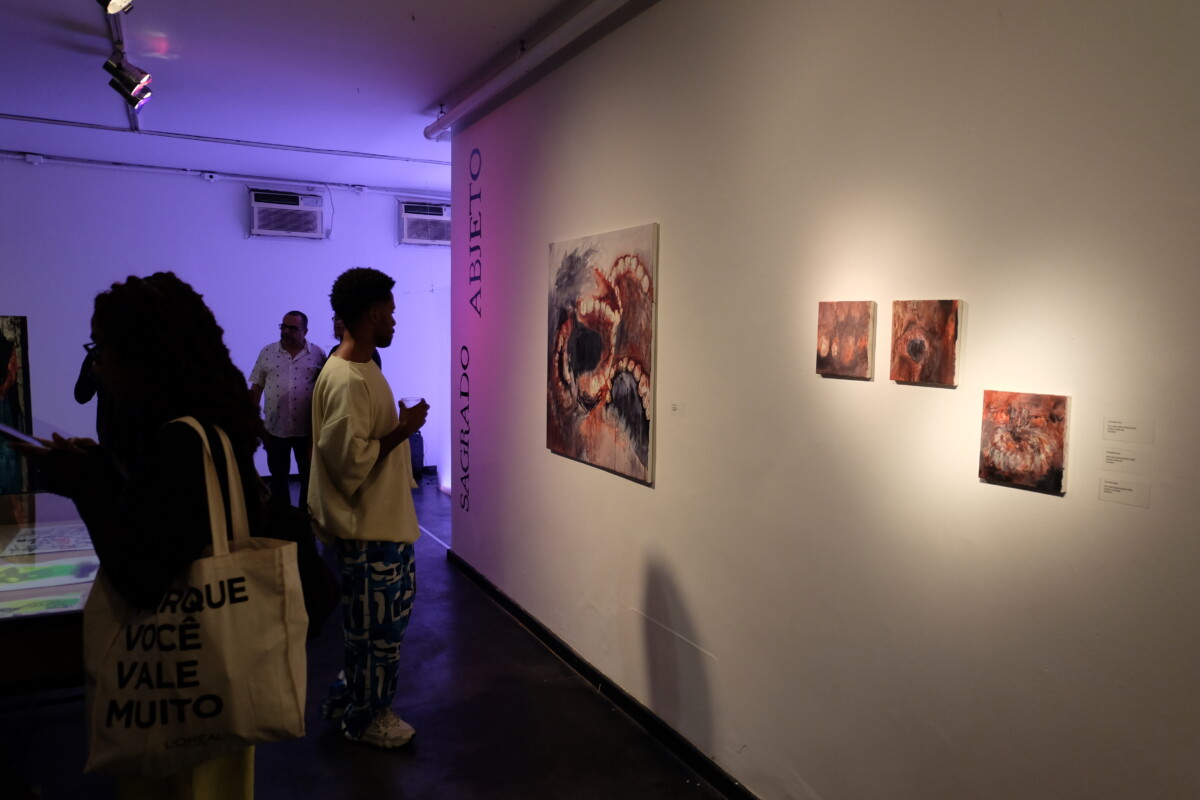
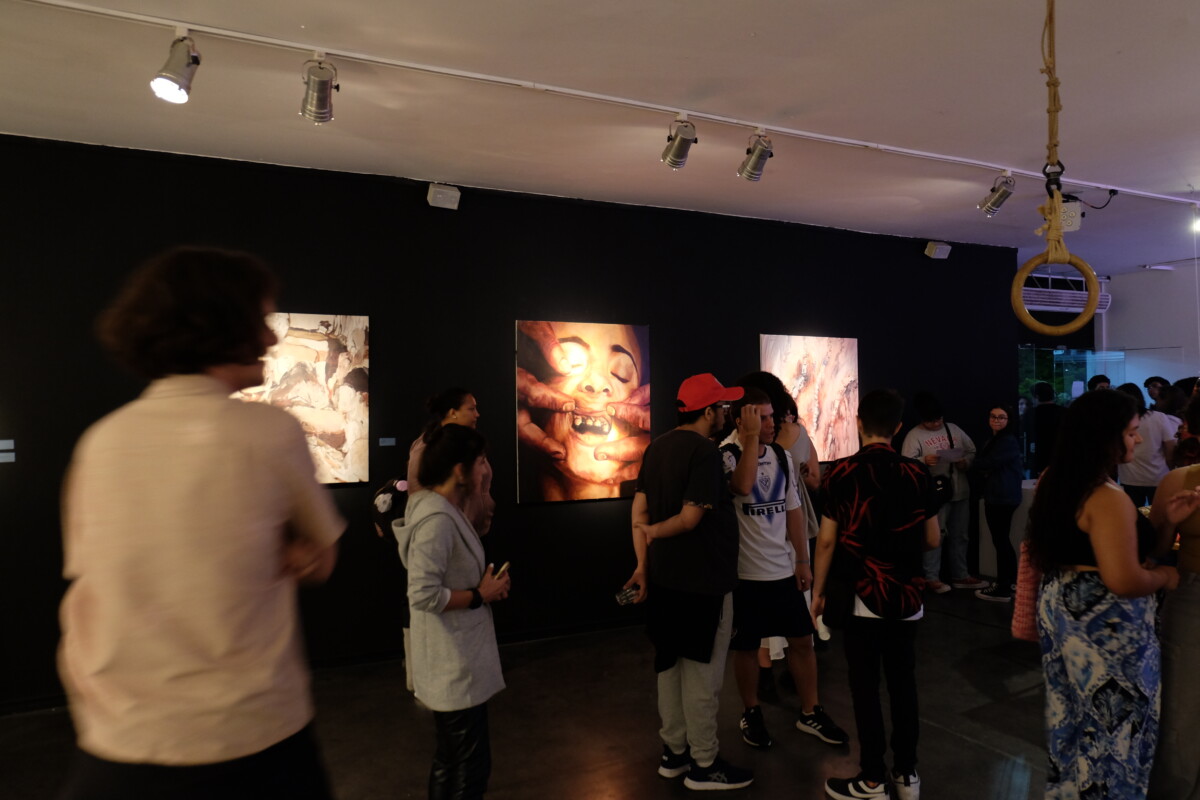
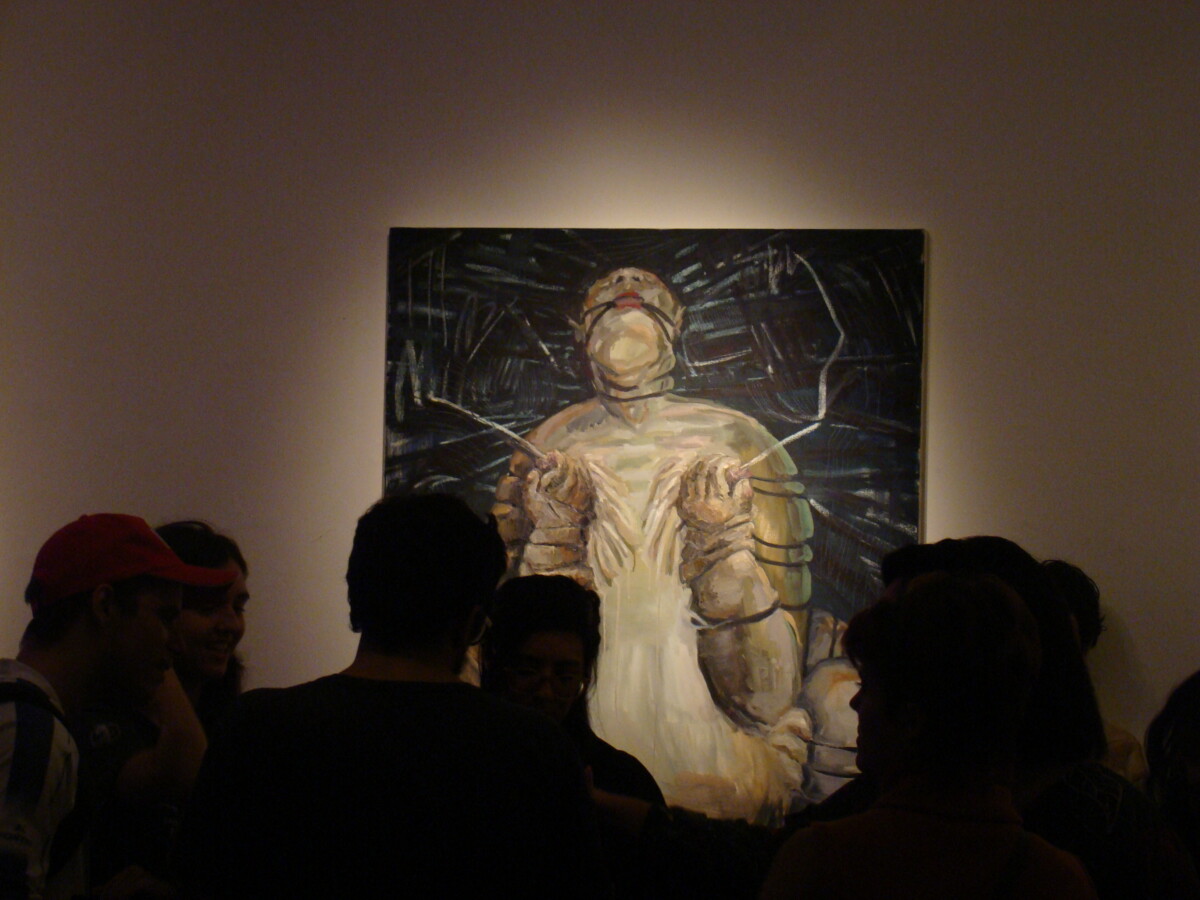
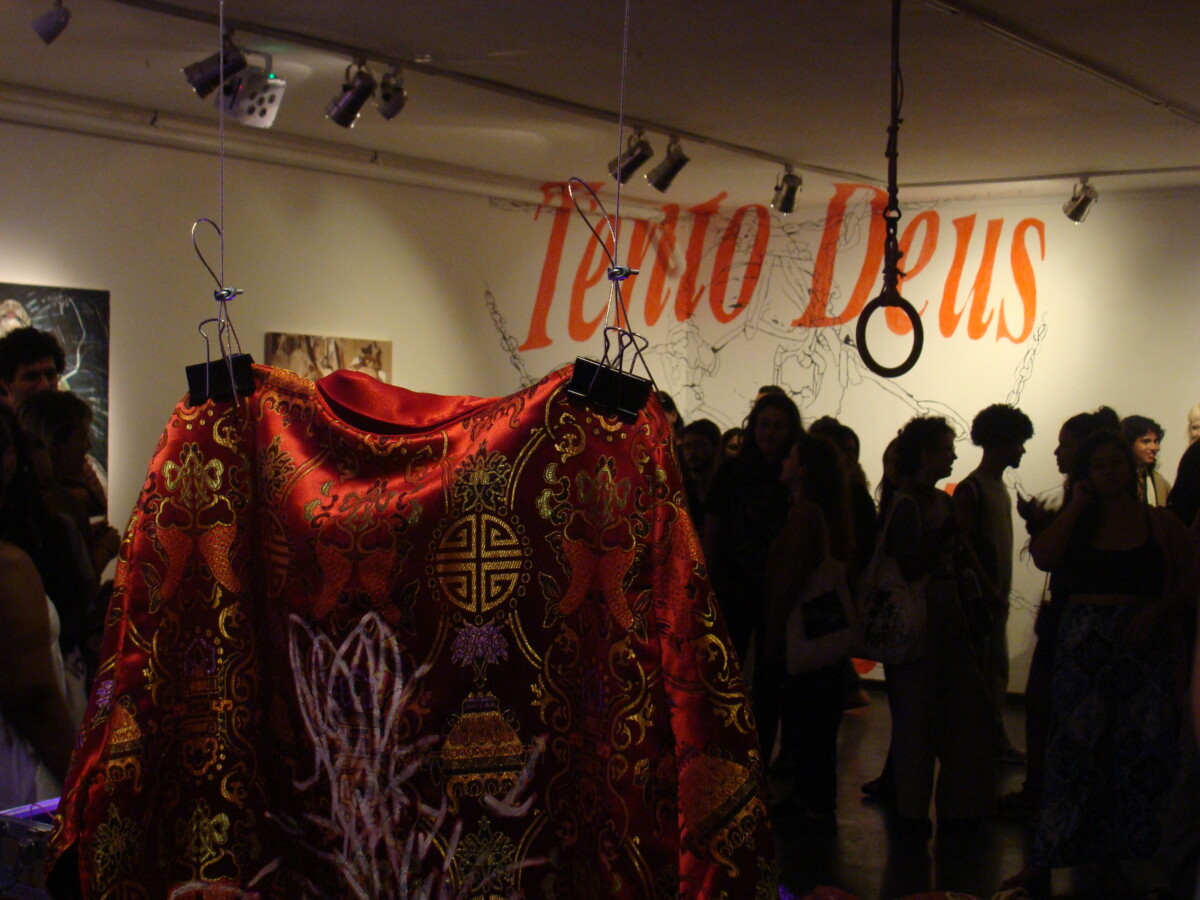
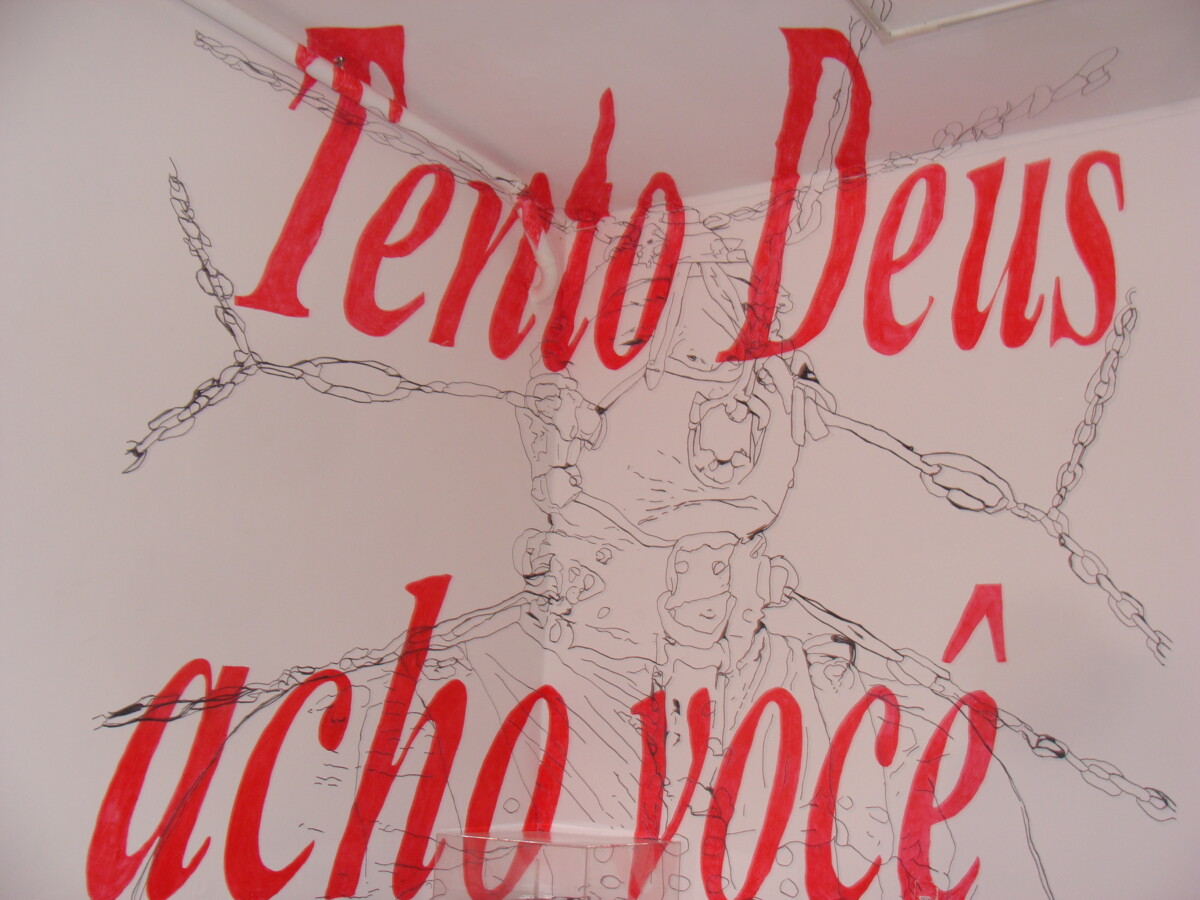
On June 1, 2023, we opened the group exhibition 𝑺𝑨𝑮𝑹𝑨𝑫𝑶 𝑨𝑩𝑱𝑬𝑻𝑶 (Sacred Abject) at Cândido Portinari Gallery in the State University of Rio de Janeiro (UERJ). It was my first in-person curatorial project of my own, co-curated with Diogo Santos, professor and exhibition coordinator at UERJ. The show featured twelve contemporary artists from São Paulo, Rio de Janeiro, and Brasília – Flávia Ventura, Níke Krepischi, Nuno Q Ramalho, Luisa Callegari, Sansa Rope, Márcia Falcão, Fernanda Azou, Fava da Silva, Renan Teles, Marlon Amaro, Carolina Melgarejo and Gabriella Barbosa.
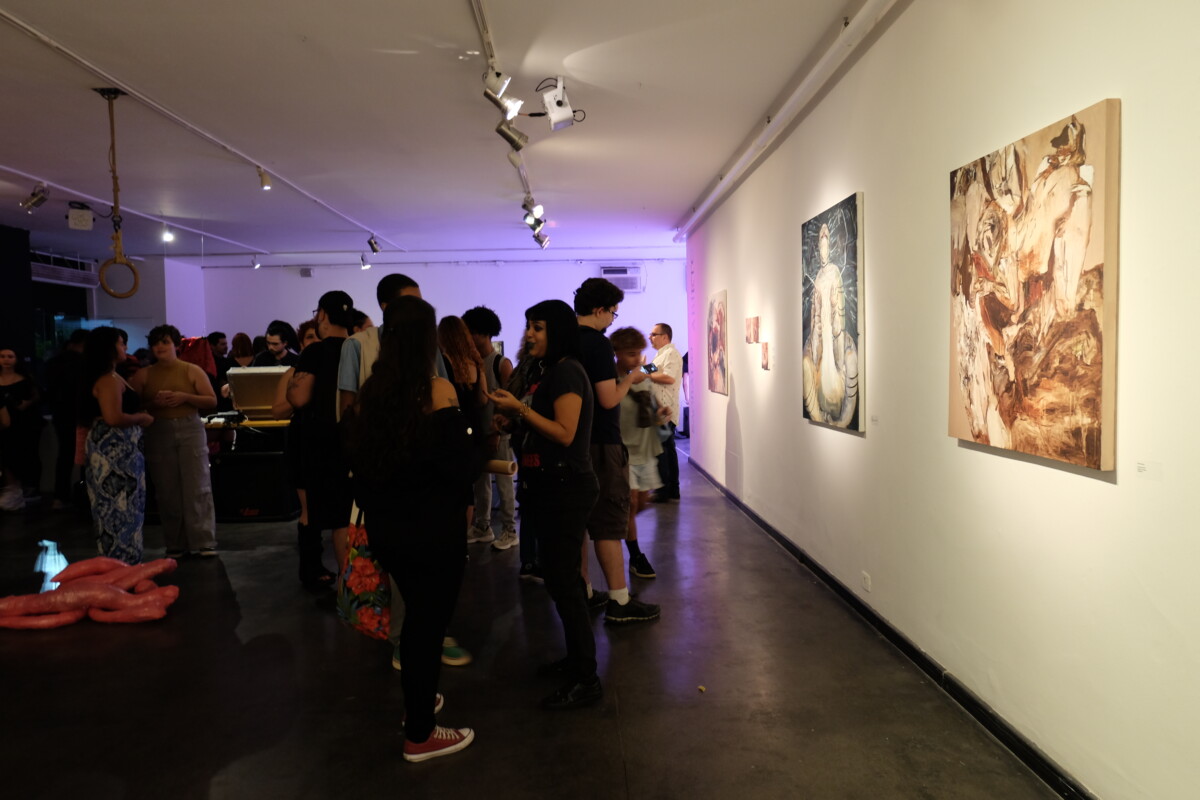
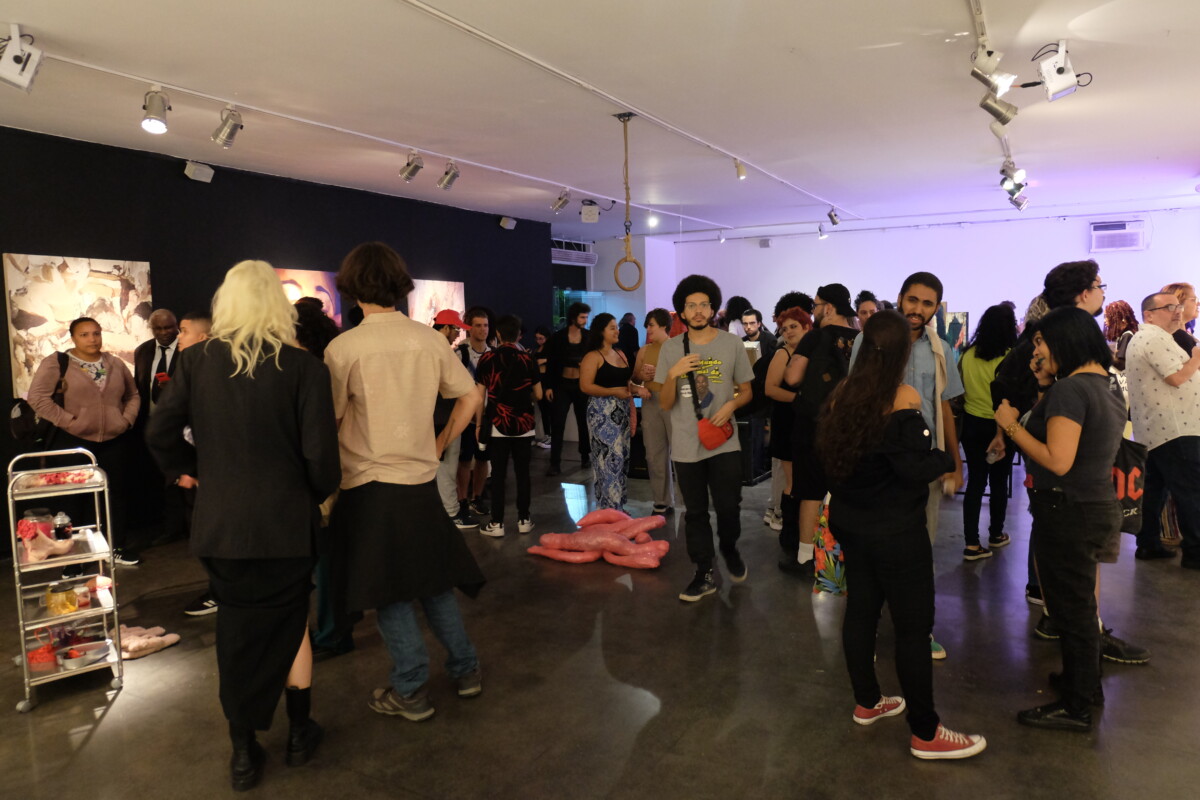
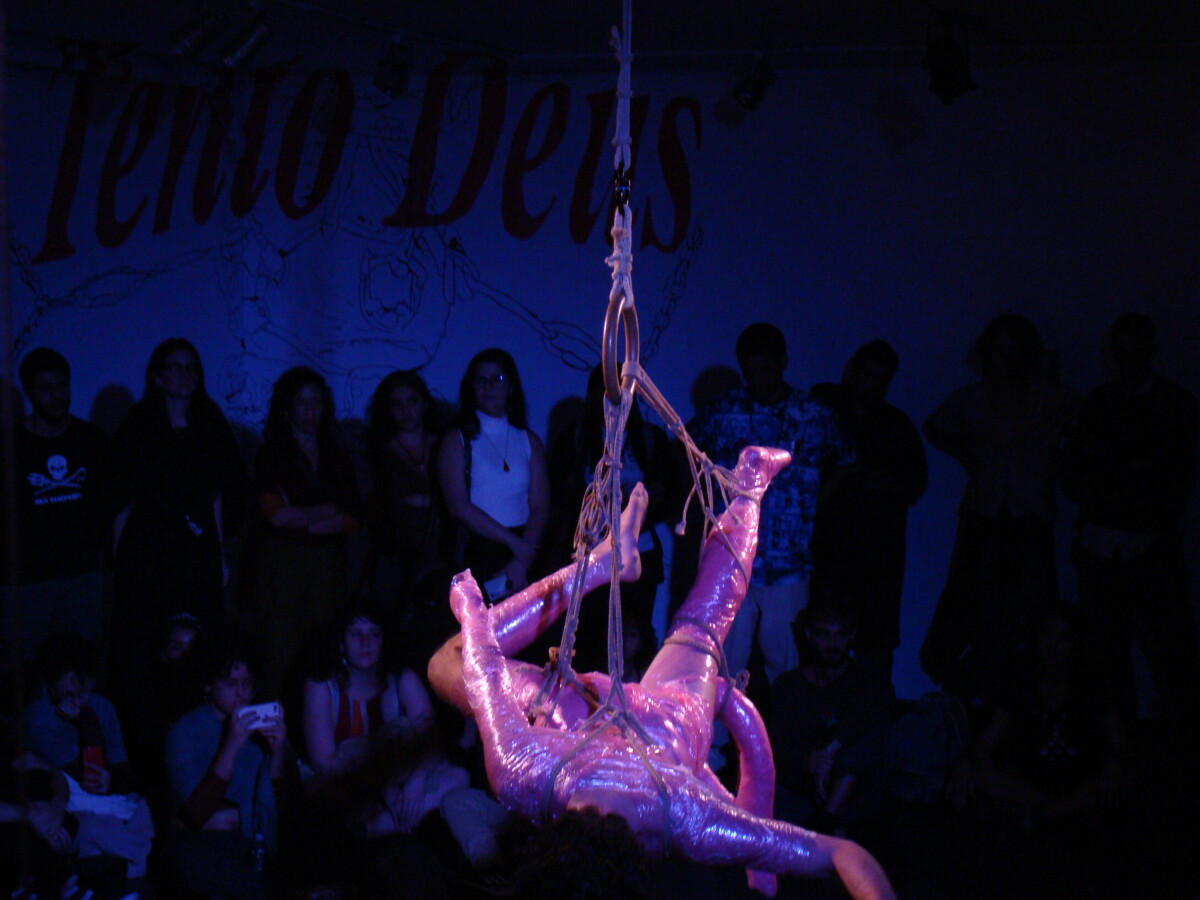
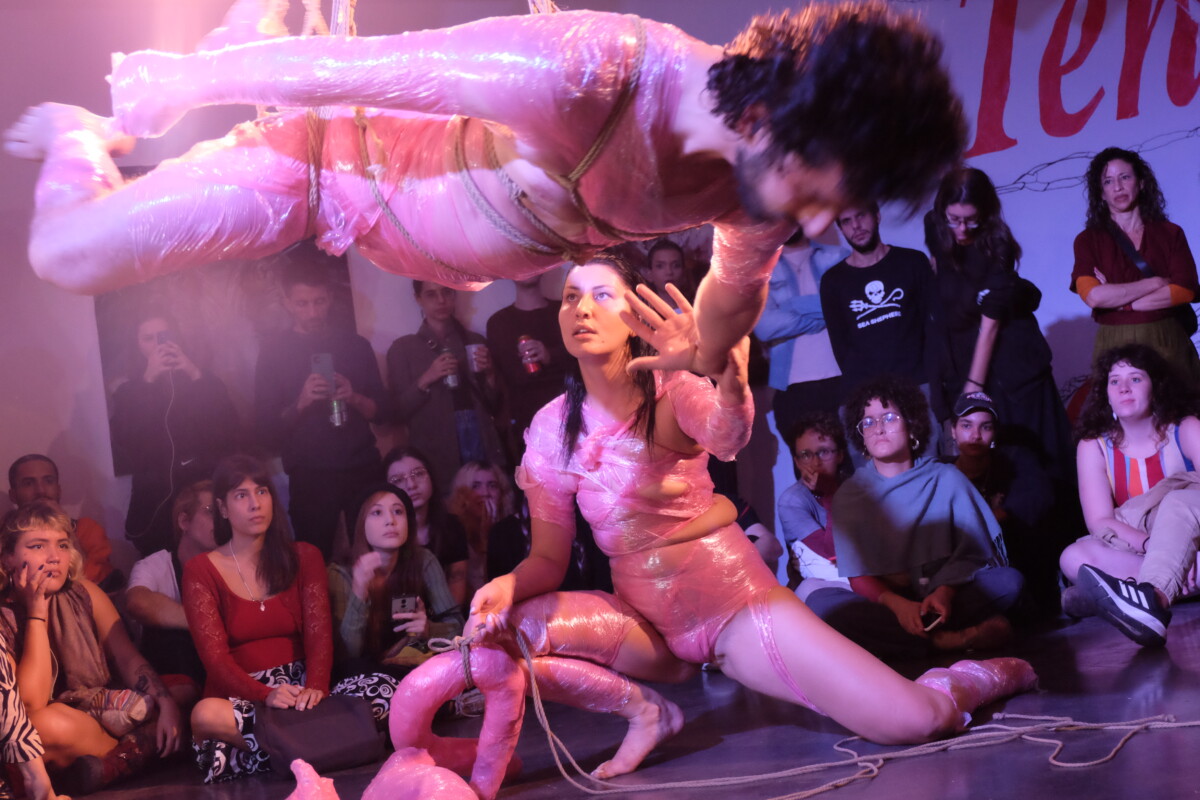
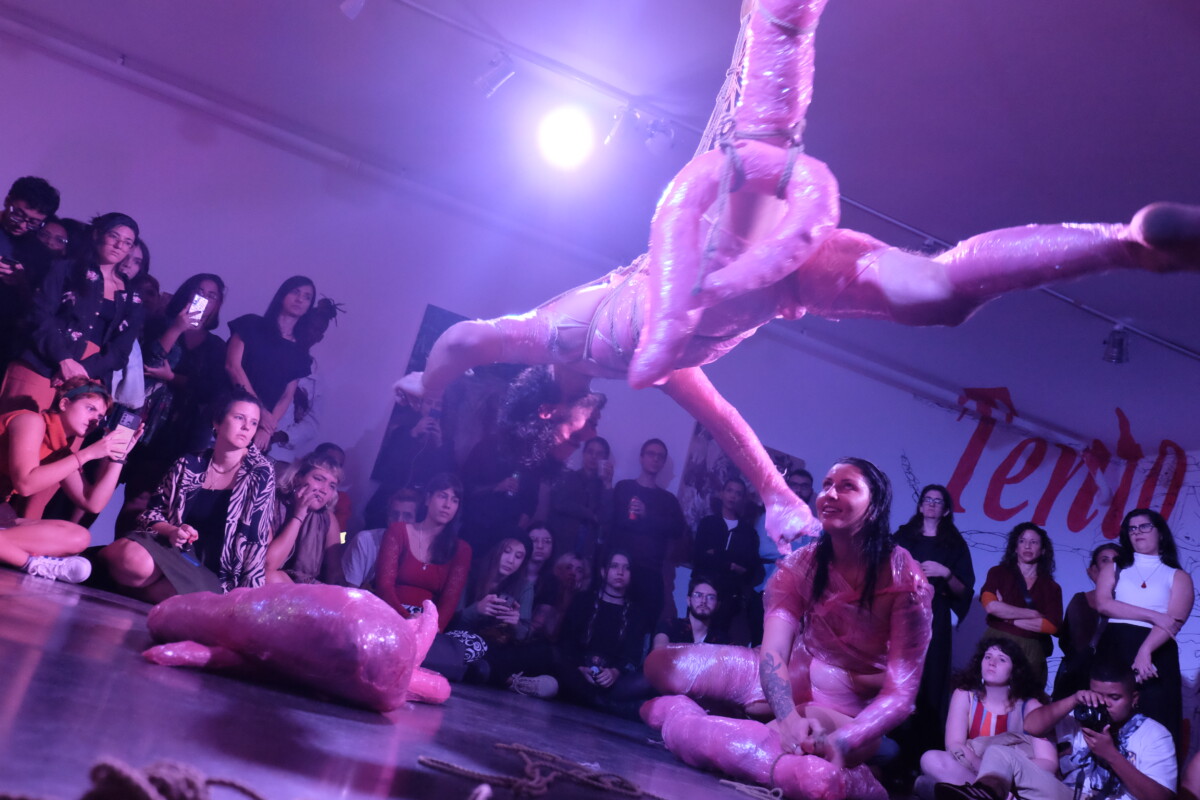
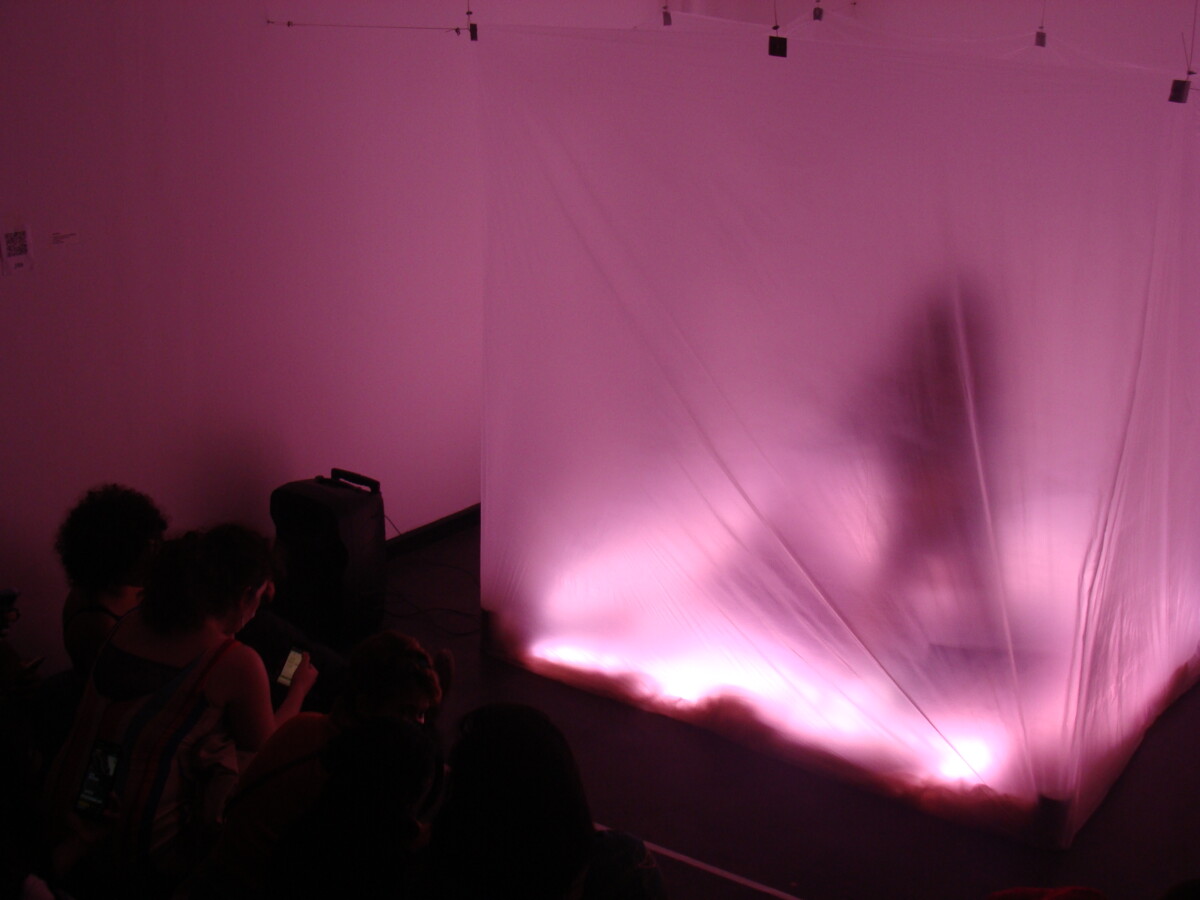
In addition to paintings and installations, the exhibition also featured two performances. In Antropomorfa, by Sansa Rope and Luísa Callegari, Japanese bondage (kinbaku) techniques were used to suspend the performer’s body from the gallery ceiling. Covered in pink vinyl and fused to pink silicone prostheses, they embodied the expansion of the possibilities of sensory pleasure—highlighting the erotic within constriction, domination, and servitude, central themes of the exhibition. In “We know your kink, Brazil, our statistics don’t lie” or “Um quarto só seu”, the audience found themselves in the position of voyeurs: concealed behind semi-transparent plastic screens, Níke Krepischi performed by transforming knife handles into dildos, simultaneously seducing and terrifying. Despite her physical proximity to the audience, they were forced to watch the performance online, live, through a camming website used by the performer—shifting the sense of vulnerability from the performer to the viewer, who was compelled to navigate (digital) spaces typically alien to the sanitized environment of an exhibition space. Visitors to the show found themselves side by side with the performance’s online audience—composed mostly of cisgender Brazilian men, the world’s largest consumers of pornography featuring transgender bodies—who, unaware of the dual nature of the event, used the anonymity of the website’s comment section as a blank screen on which to deposit their desires and demands.
Many thanks to all the participating artists and performers—and especially to the entire team of the UERJ Department of Culture, including the scholarship students—who were crucial in making this exhibition possible, a show that was, the realization of a dream that has been with me since I first began to be moved by art.
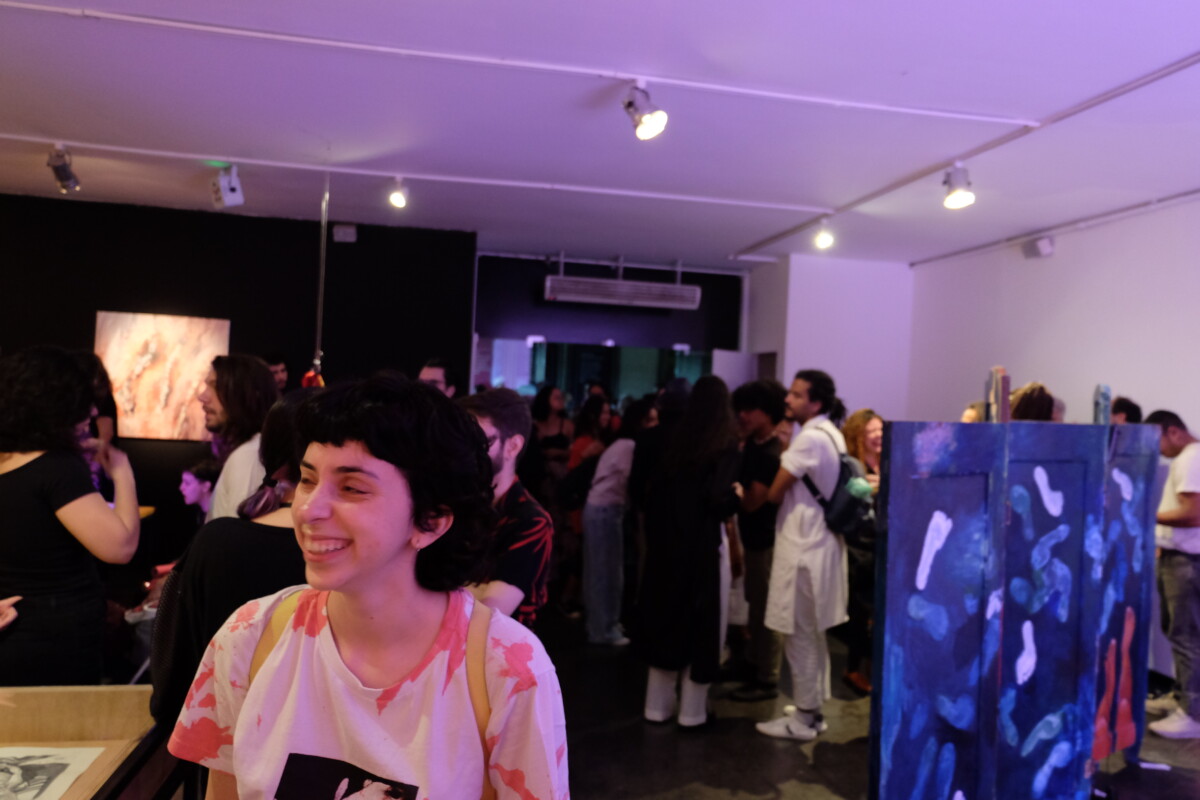
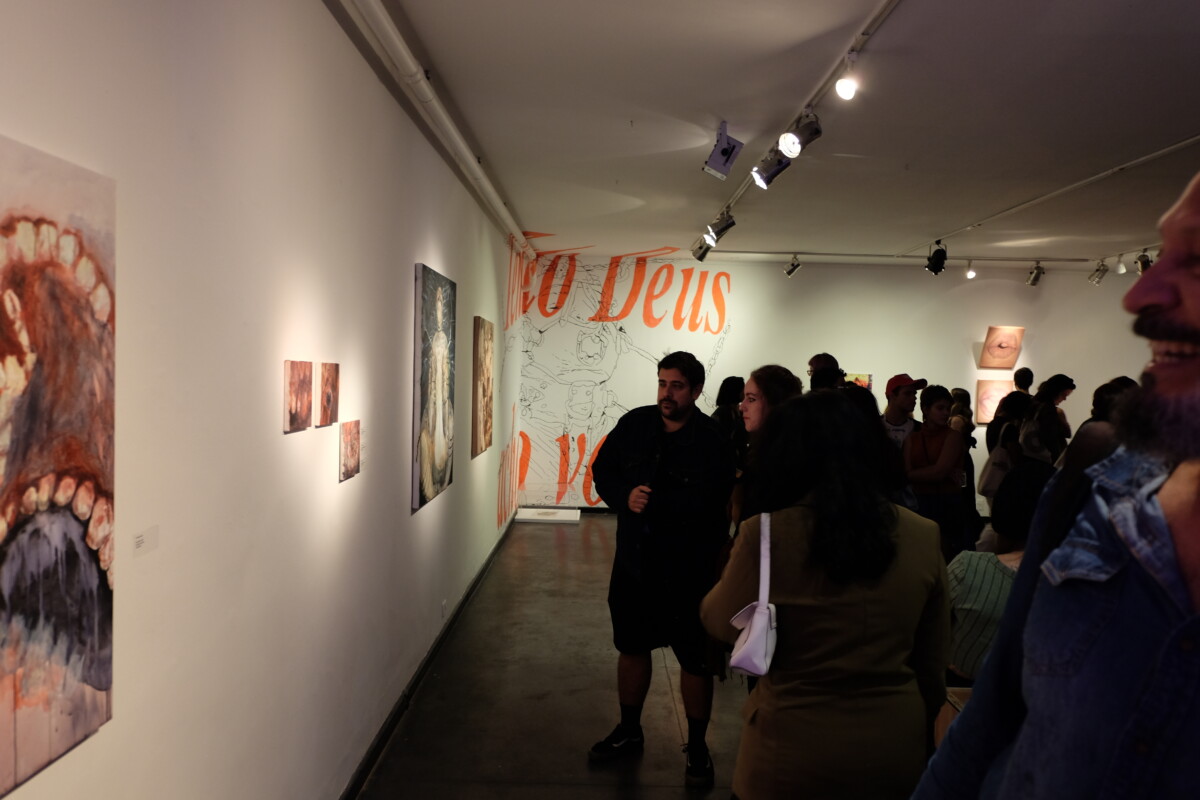
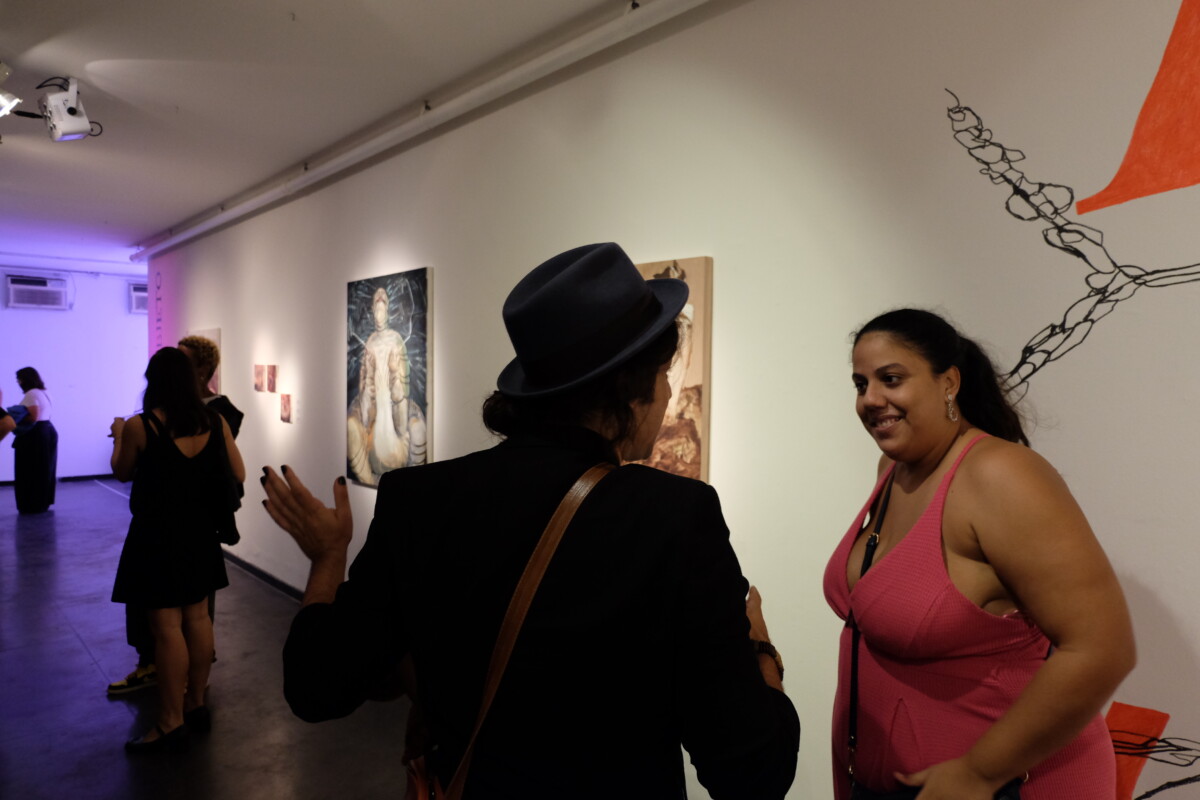
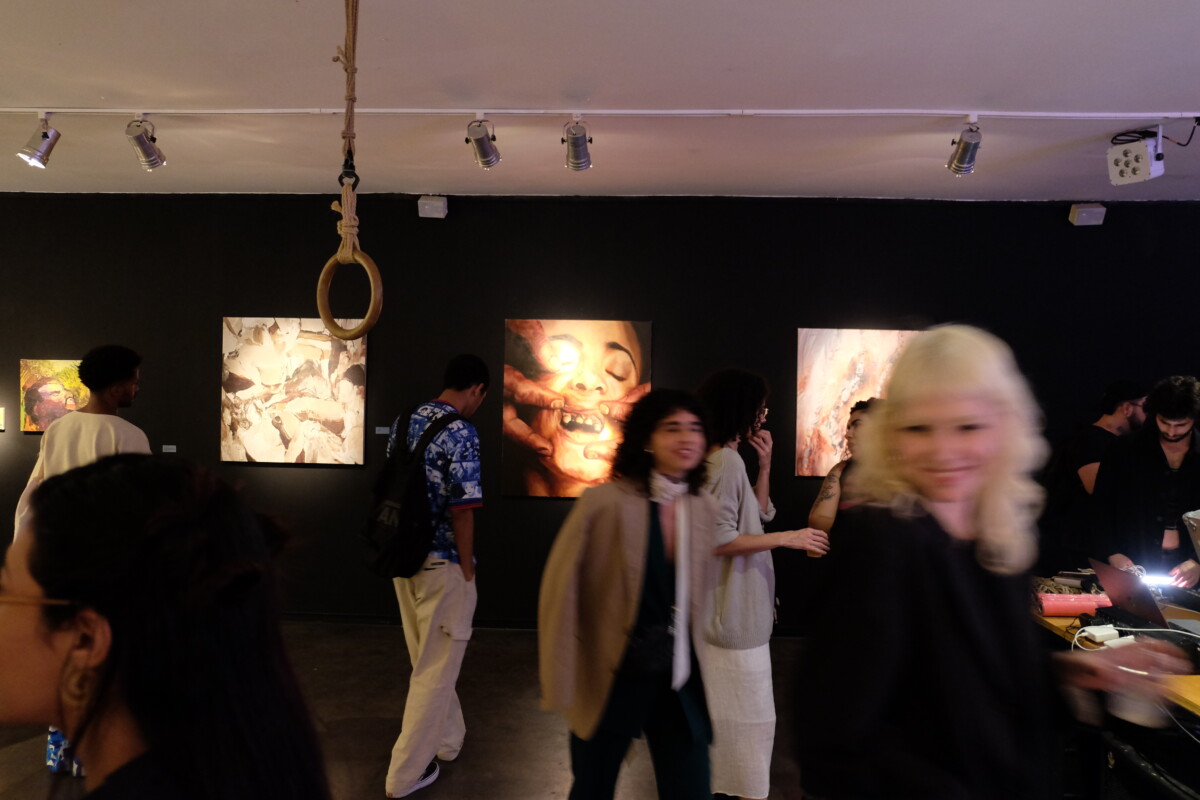
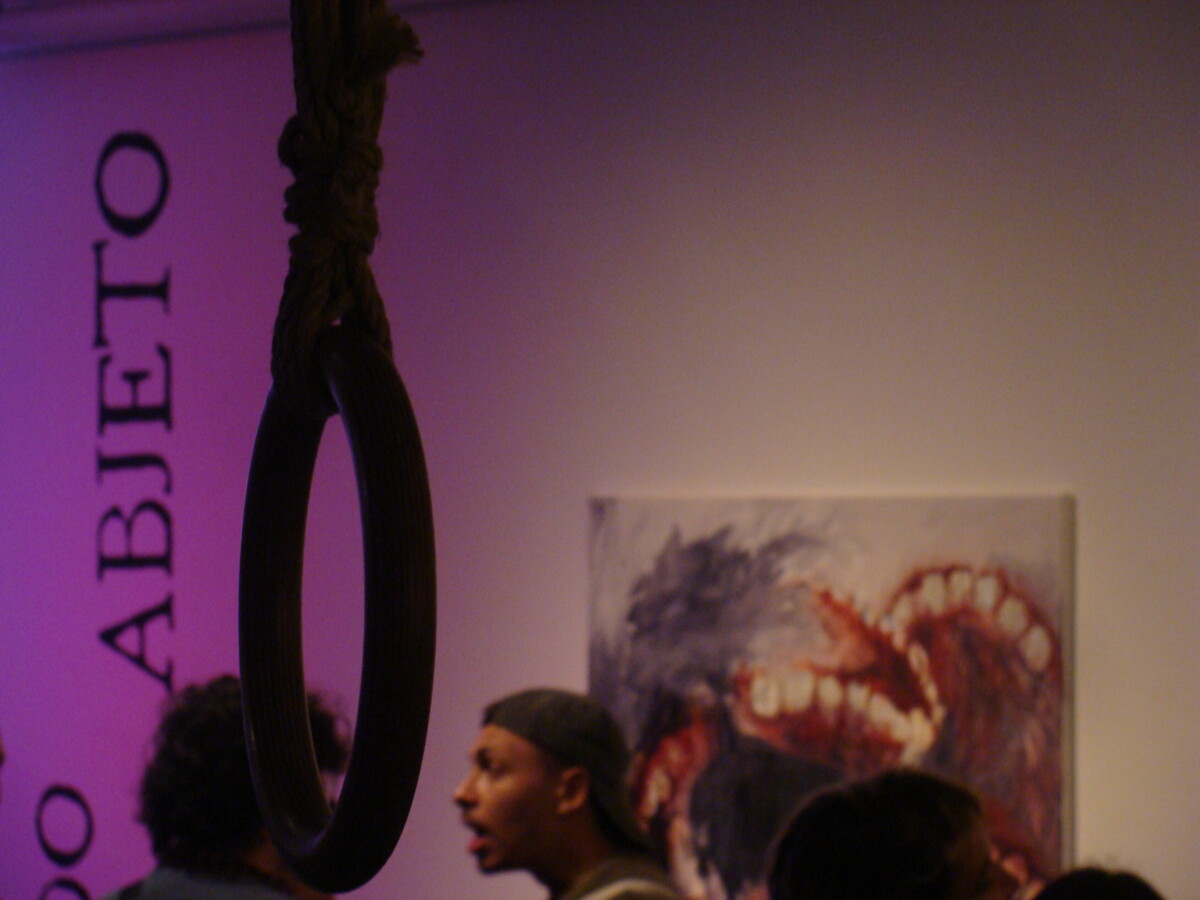
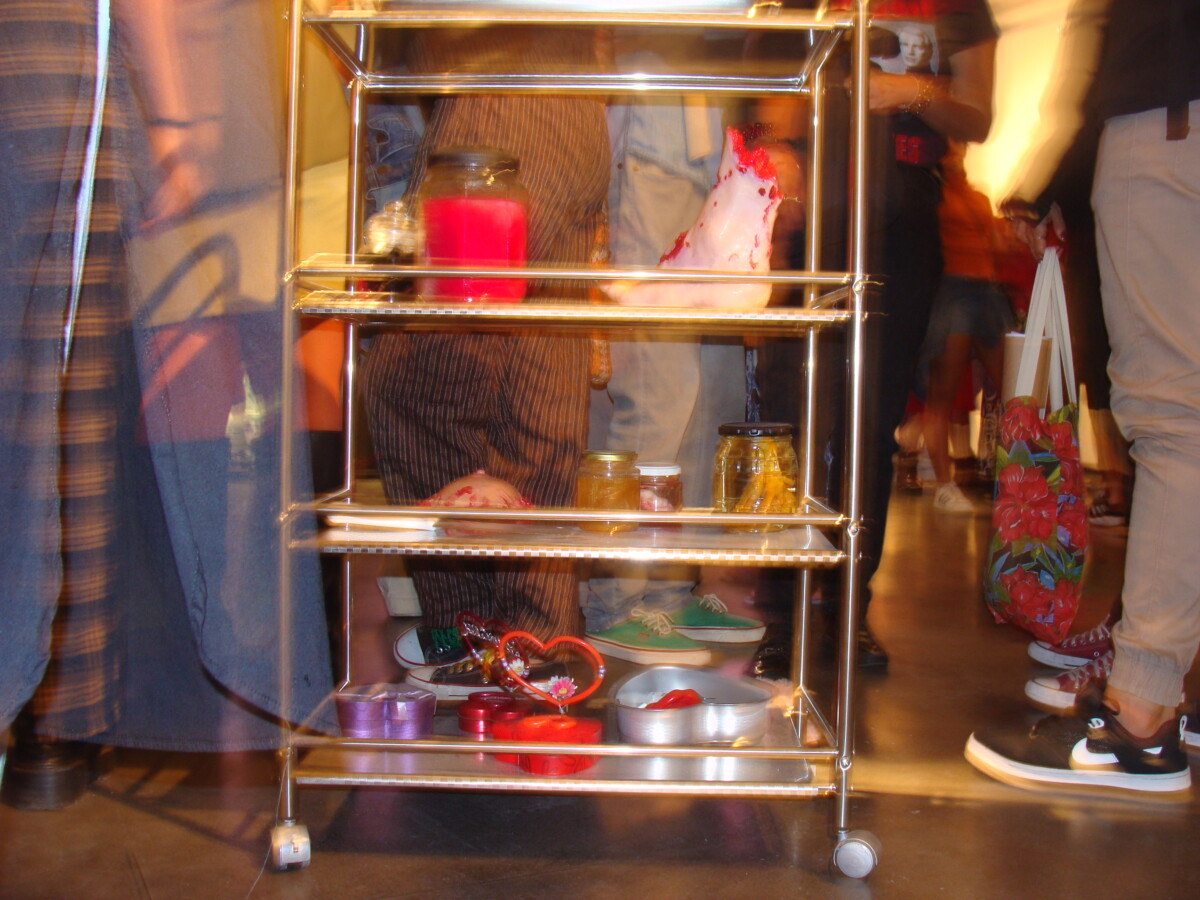
Below are a few photos from the exhibition opening, as well as the curatorial text I wrote for it.
SAGRADO ABJETO
The same flesh that, with a pulse, smiles and loves and beguiles its peers, repels every lung breathing nearby after putrefaction. Death functions as one among many bridges, carrying us from the Sacred — the breath of life — unto the Abject — organic matter in decay.
It is no accident that we invent elaborate rites to render bearable the inexorable presence of the corpse: we bury ourselves, burn ourselves, consign ourselves to the sea, hoping thereby to banish for a time the memento of what awaits us all, to sever the sinner’s flesh from the sacrosanct Soul.
Countless other practices, phenomena, and concepts serve the same purpose. Christian mythology exalts the martyr’s torture‑device to the highest icon of the Sacred. Faith in the legitimacy of the executioner drapes its weapon in the veil of justice, purifying violence enacted in the name of Power. Fire, destructive, if well tended, turns pathogenic rawness into nutritive cookedness, a source of Life.
Artistic practice, cathartic and sublimatory, wields a similar force: the artists of SACRED ABJECT, with oil and plaster and body and light, transfigure life’s trauma—within bodies and spaces deemed base—into an aesthetic celebration of deviant jouissance. Eroticism, after all, lays bare humanity’s vast capacity to transmute whatever repels us in bodies and relations into objects of devotion:
from the fluids that leak from us to the filthy feet that bear our weight,
from sadism to masochism,
from pitiless command to servile obedience,
everything that sparks revulsion in the lay observer proves ripe for conversion—through proper rite by the desirous devotee—into a symbol of the divine.
Freed from the fetters of the psychological, social, existential Father, we embrace the rejection that estranges us from him, discovering within ourselves all that we require for our own consecration, fusing at last into Sacred Abject, Abject Sacred.

- activities: curation, curatorial text, exhibition
- date June 2023