
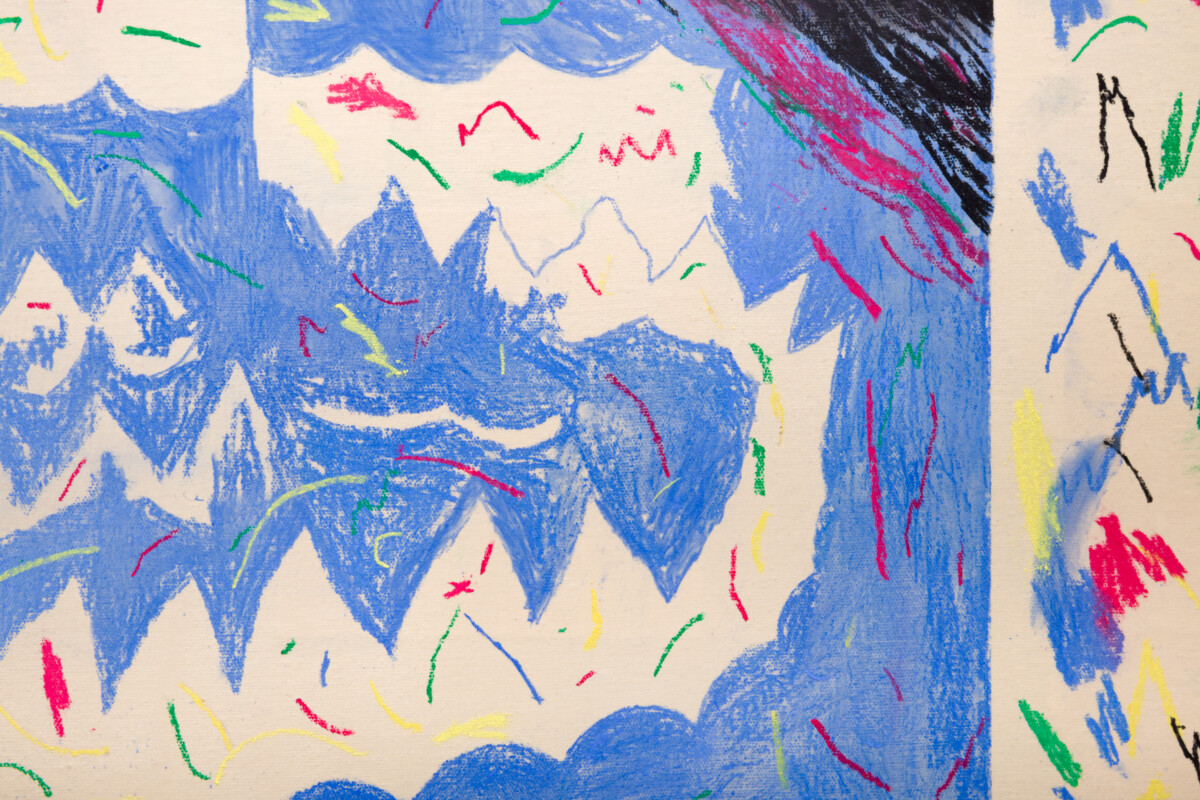
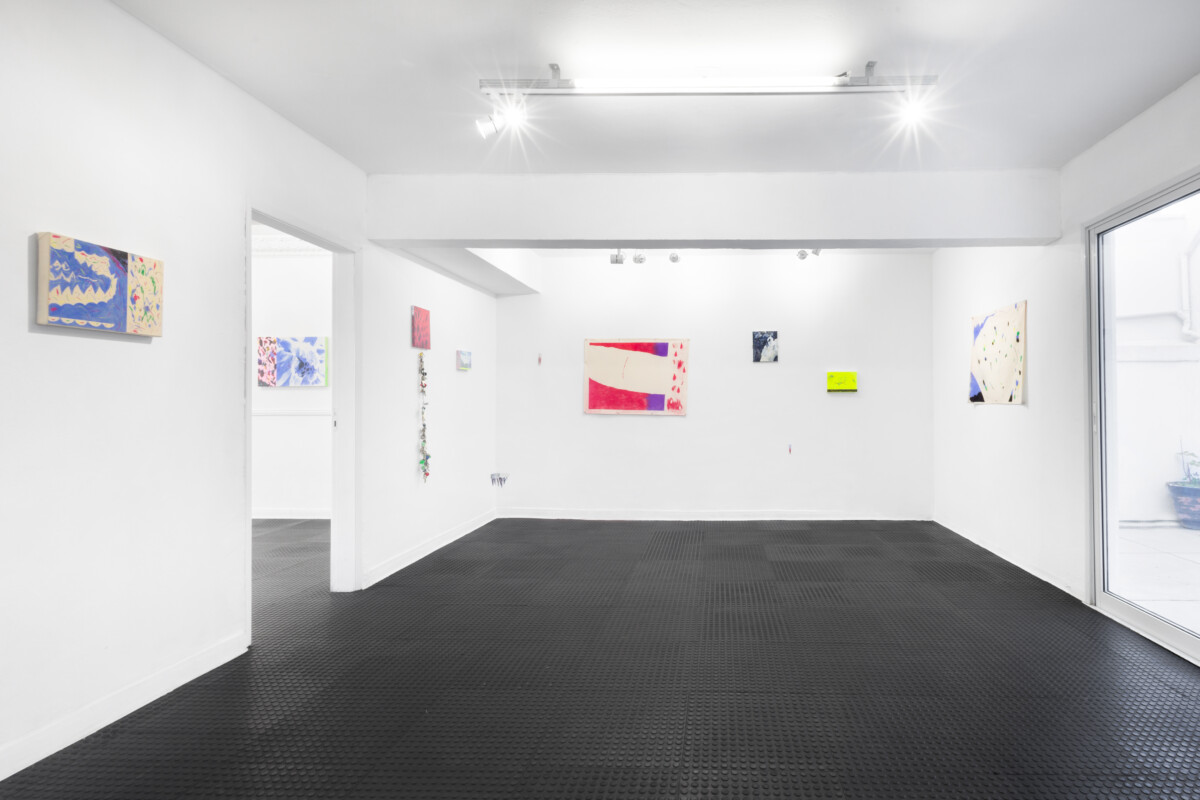
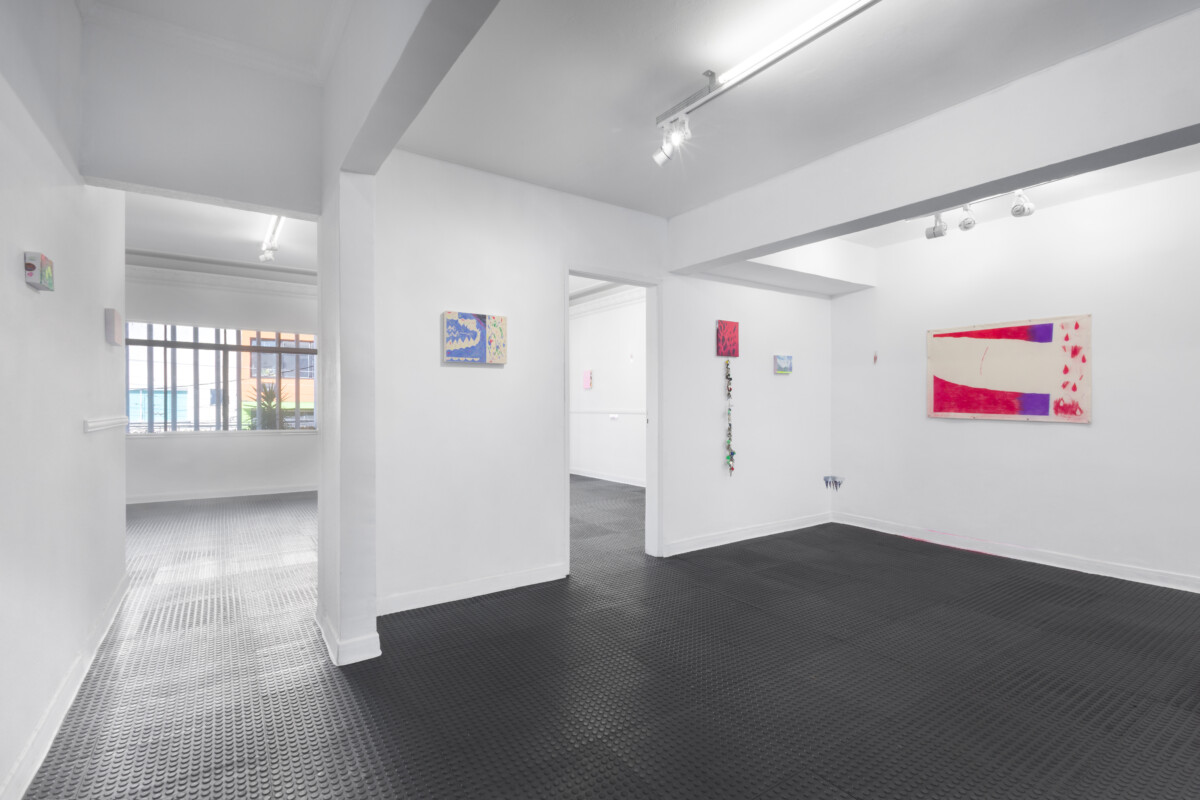
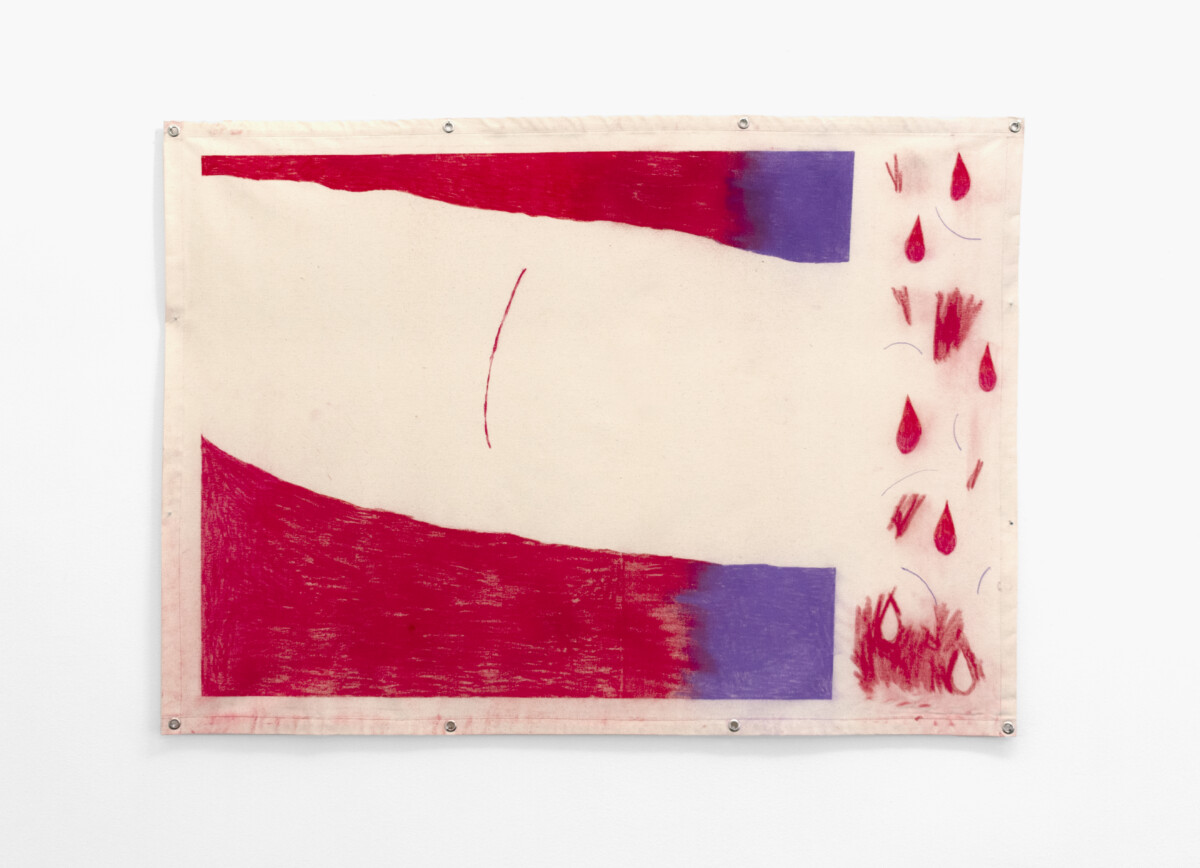
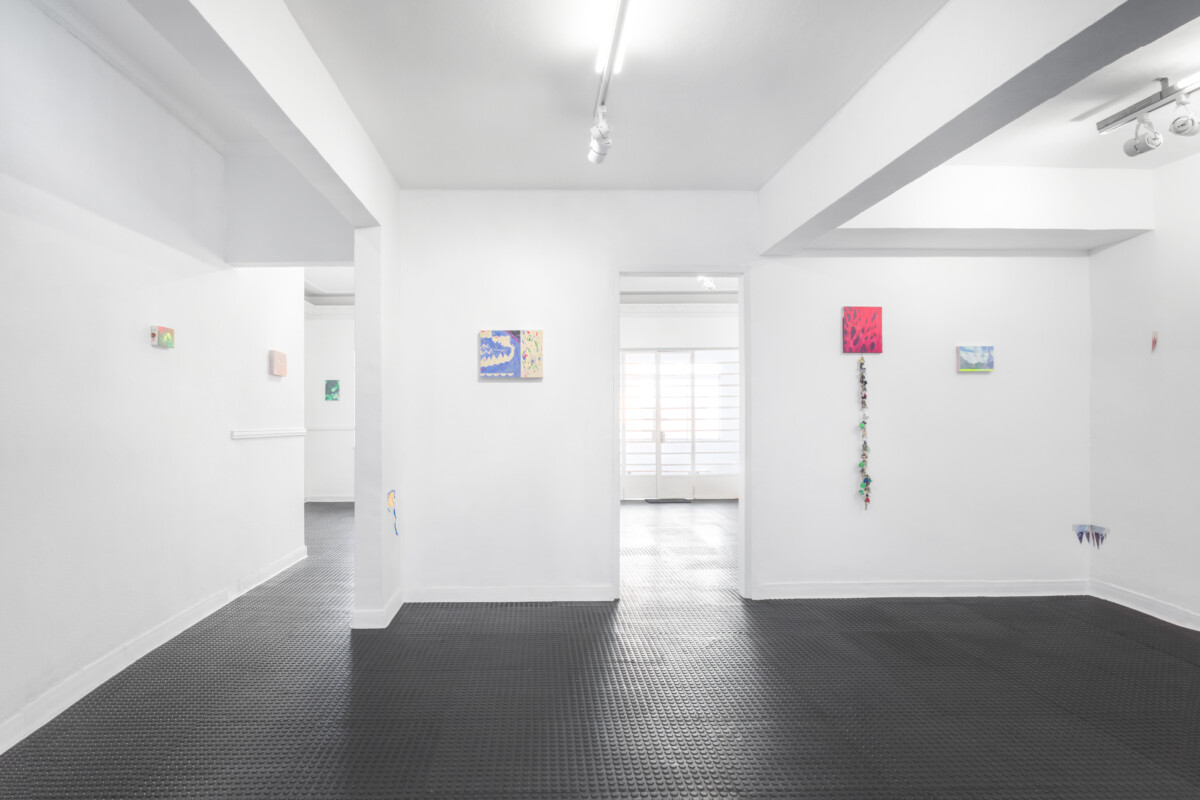
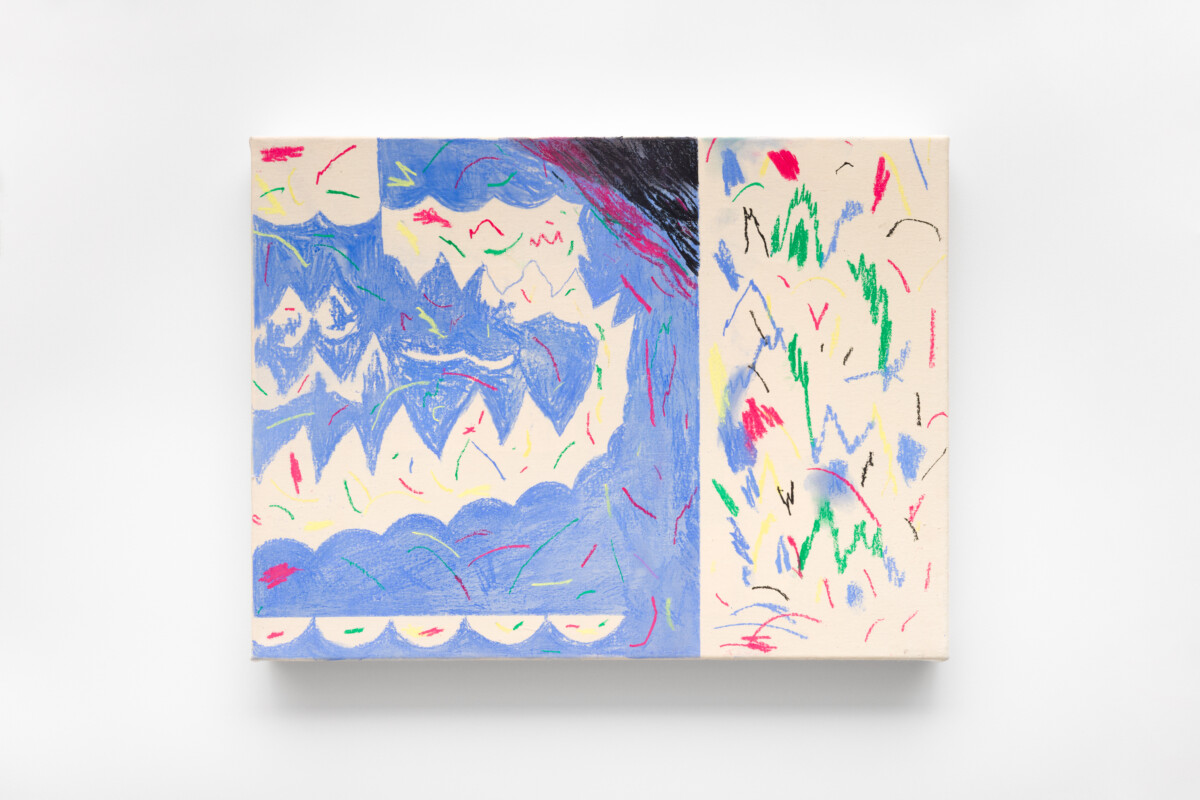
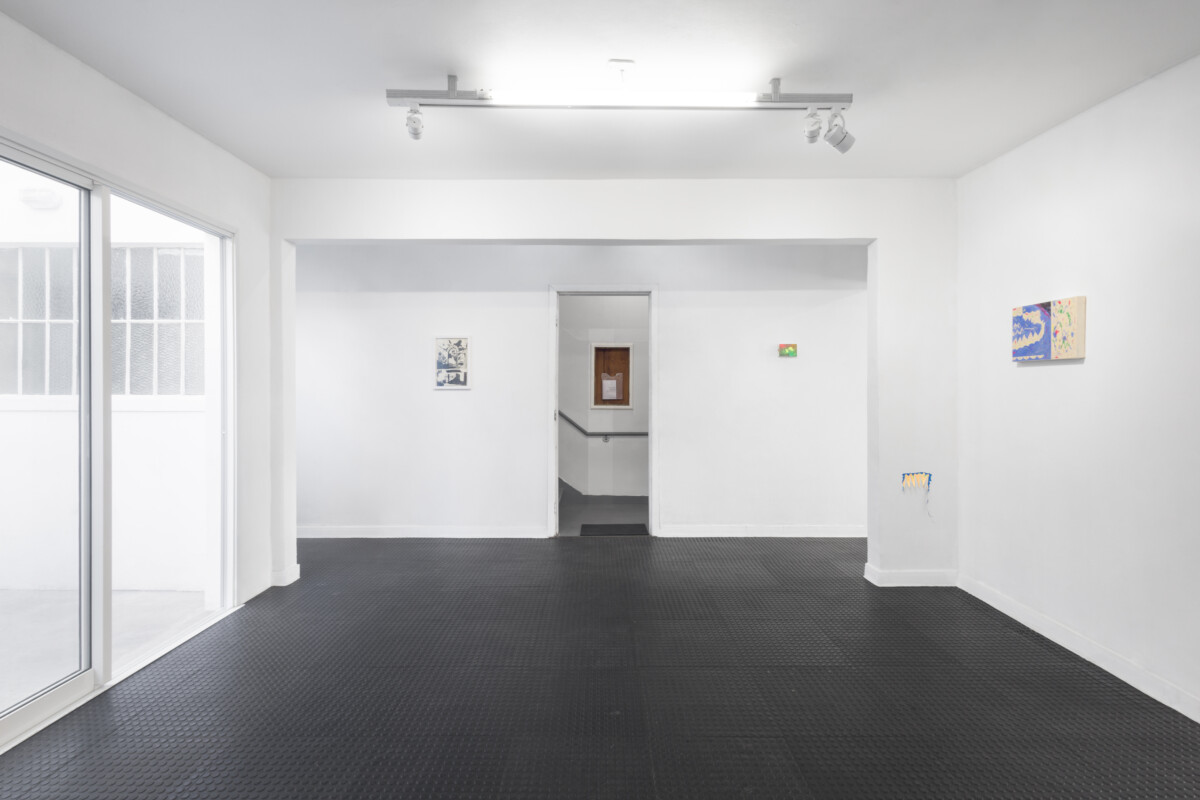
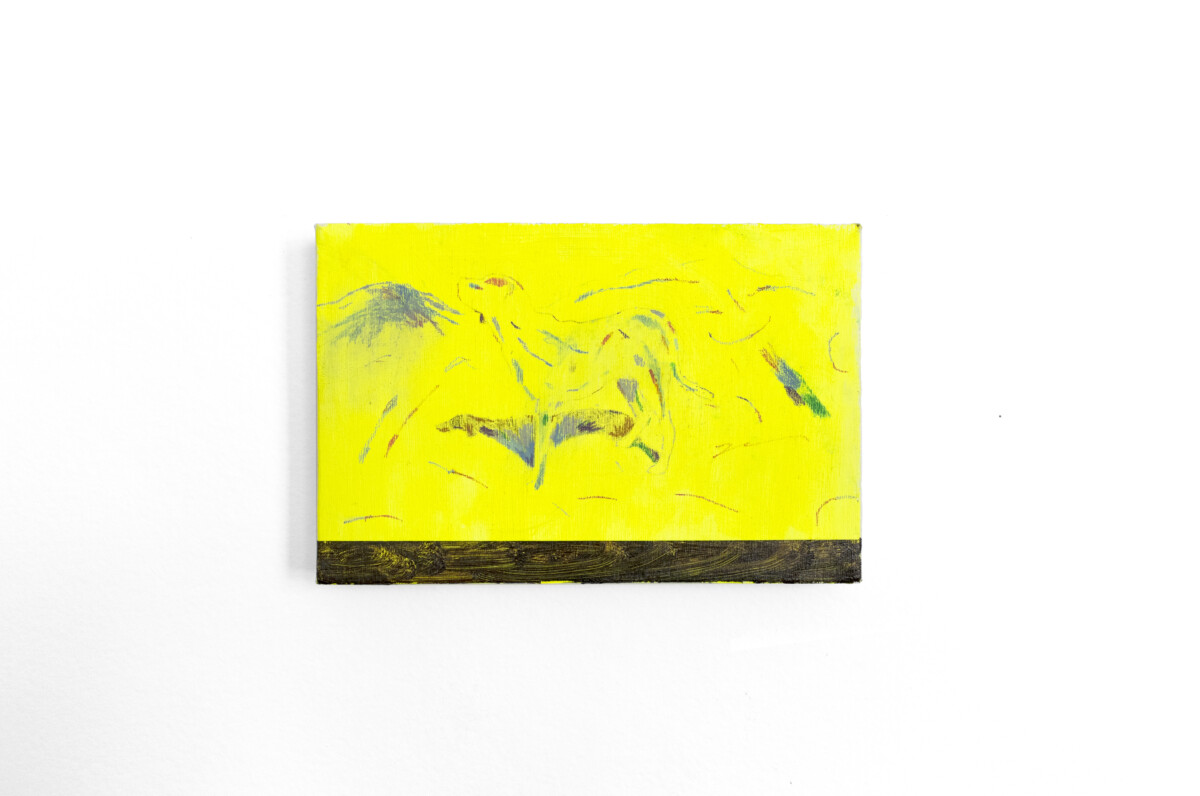
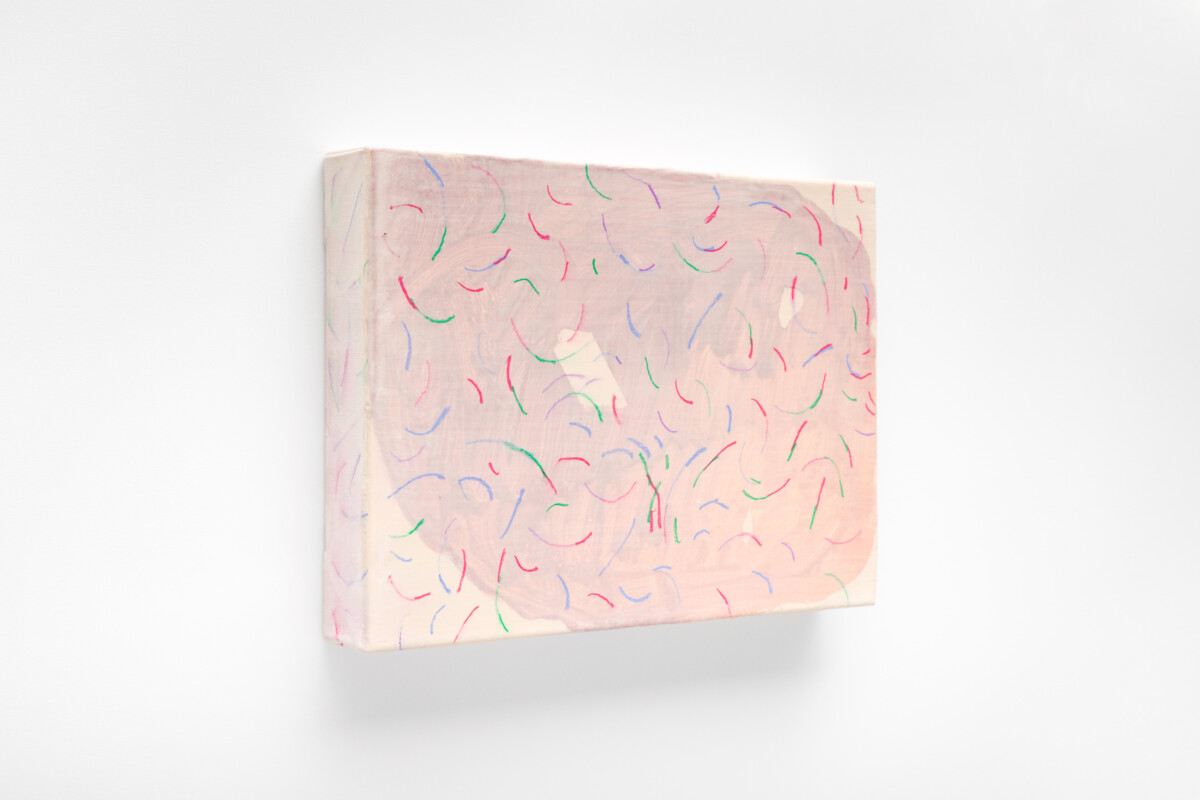
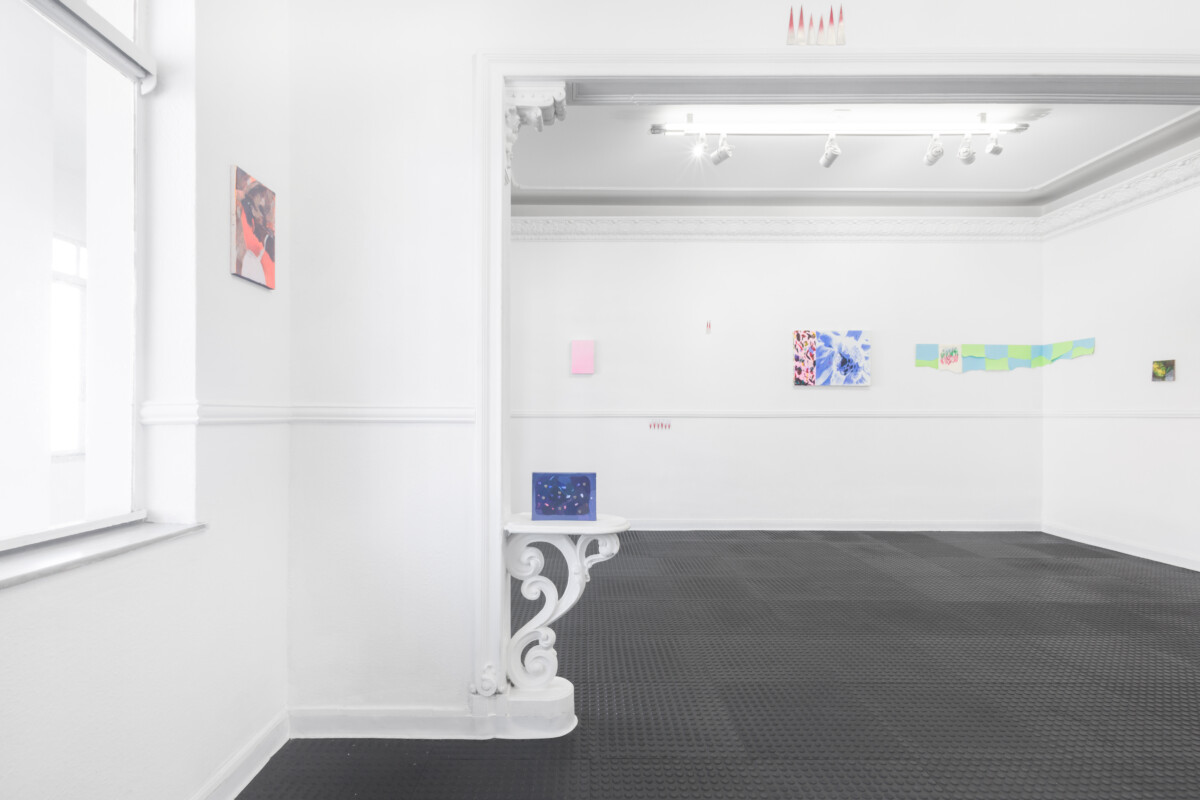
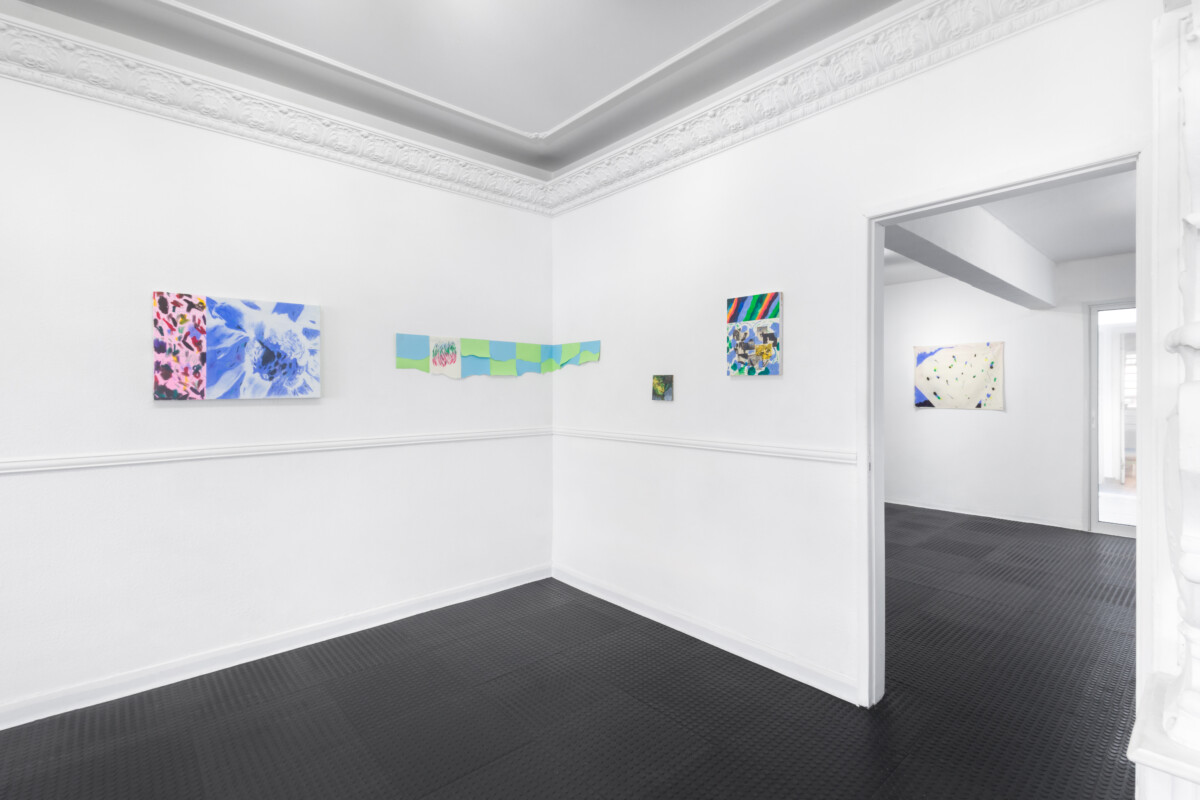
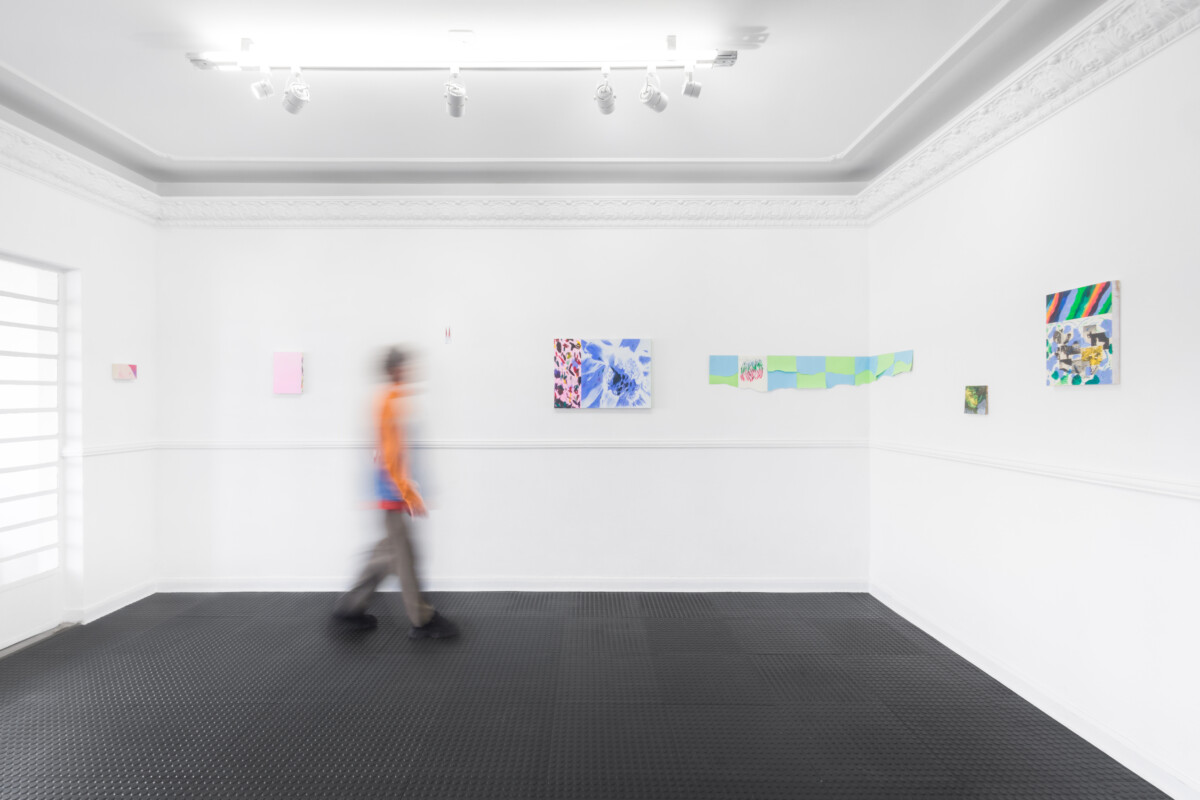
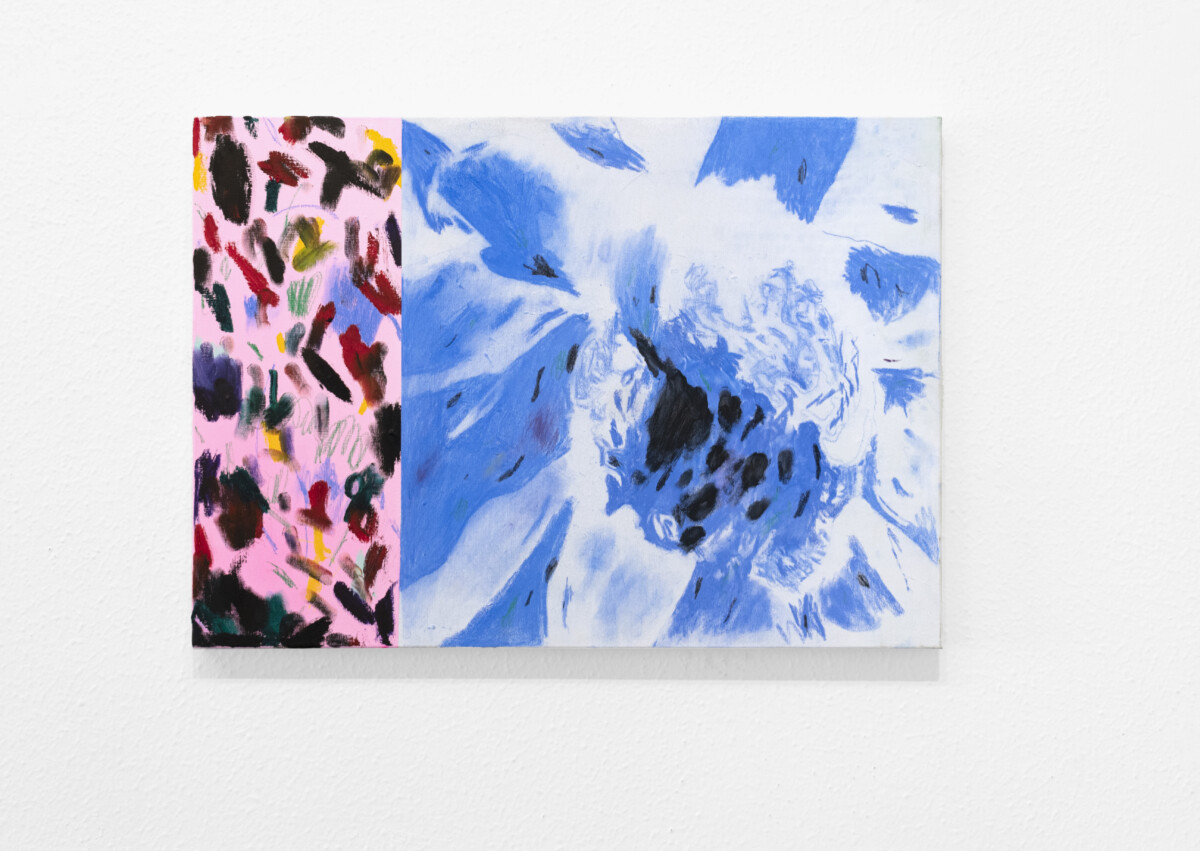
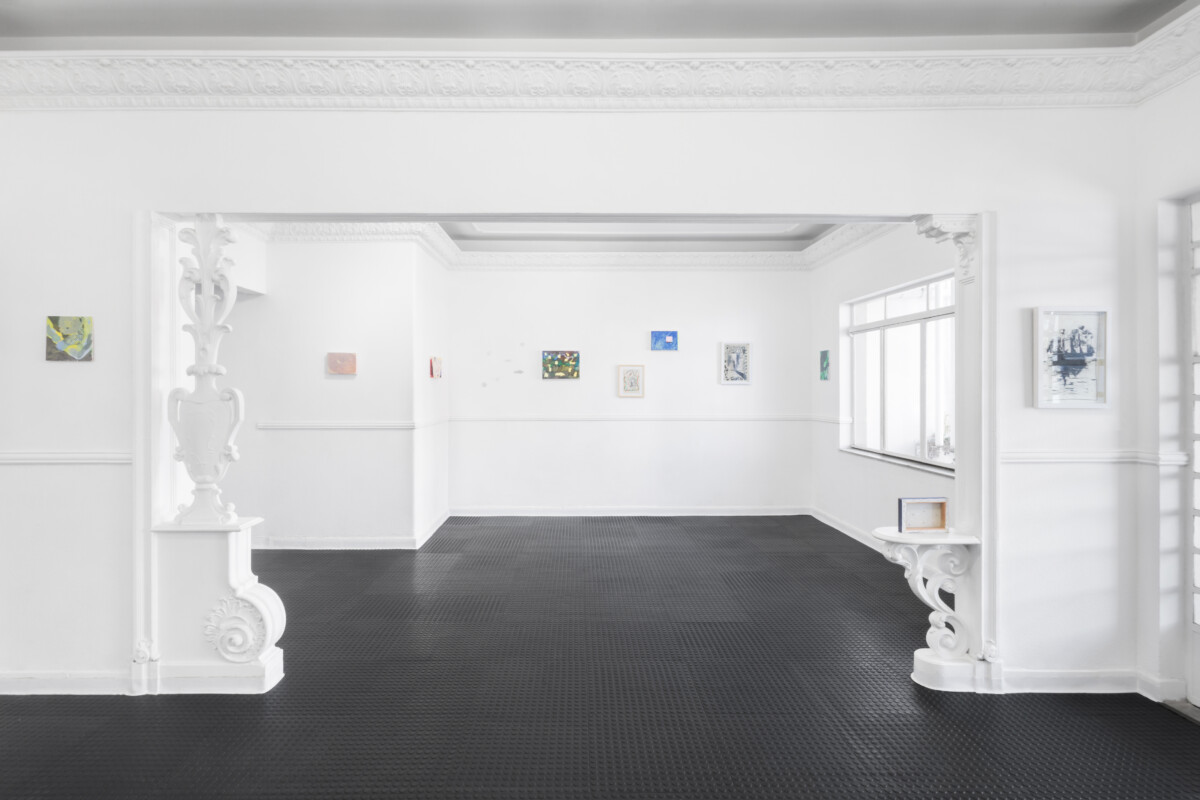
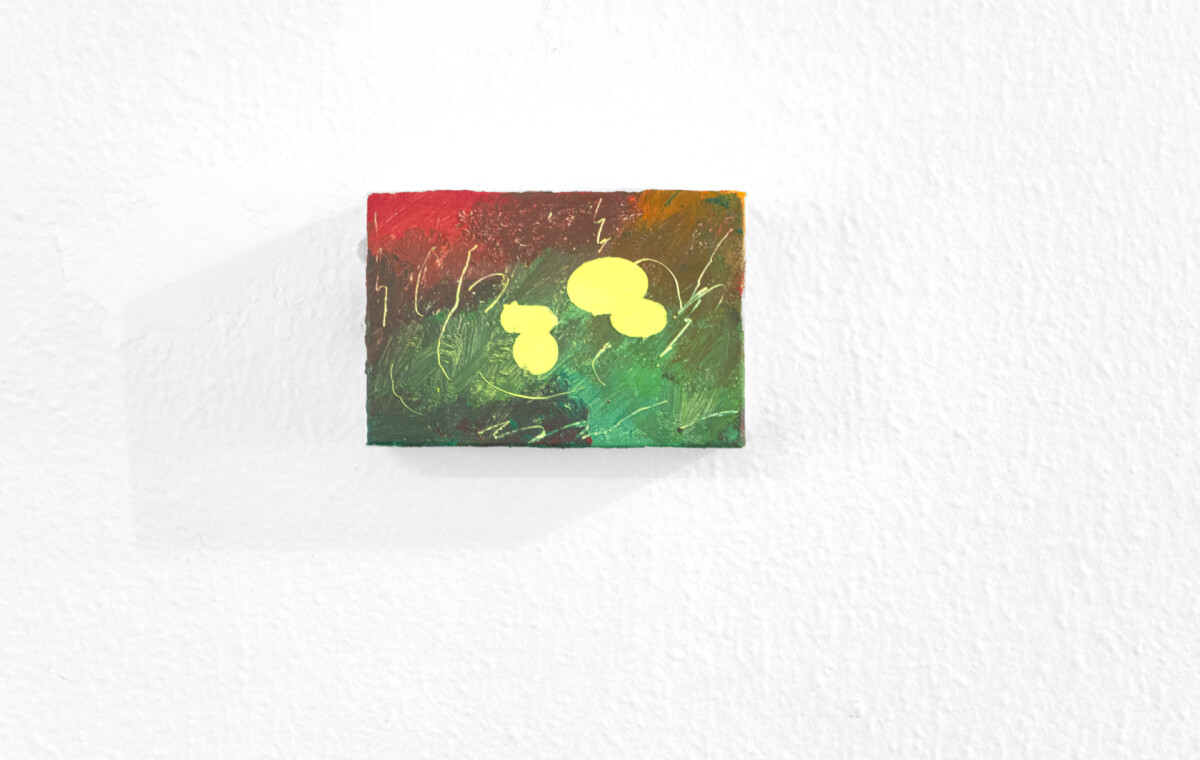
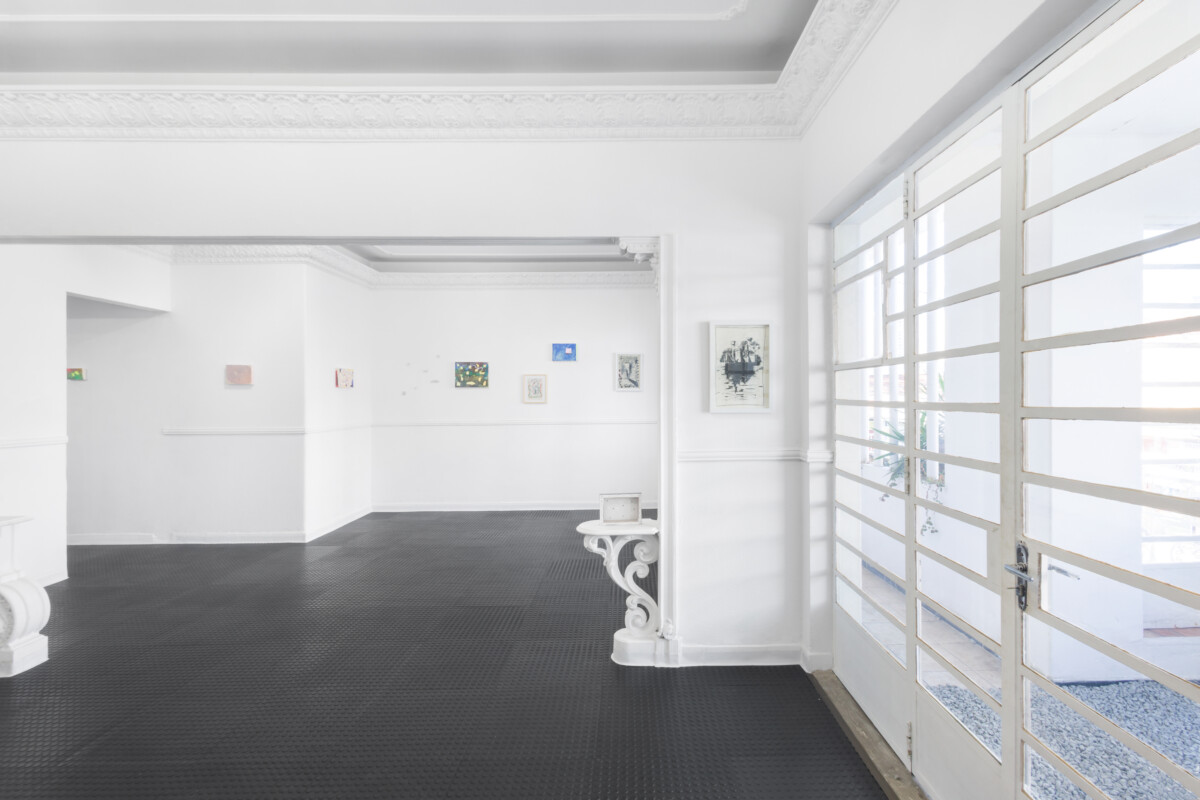
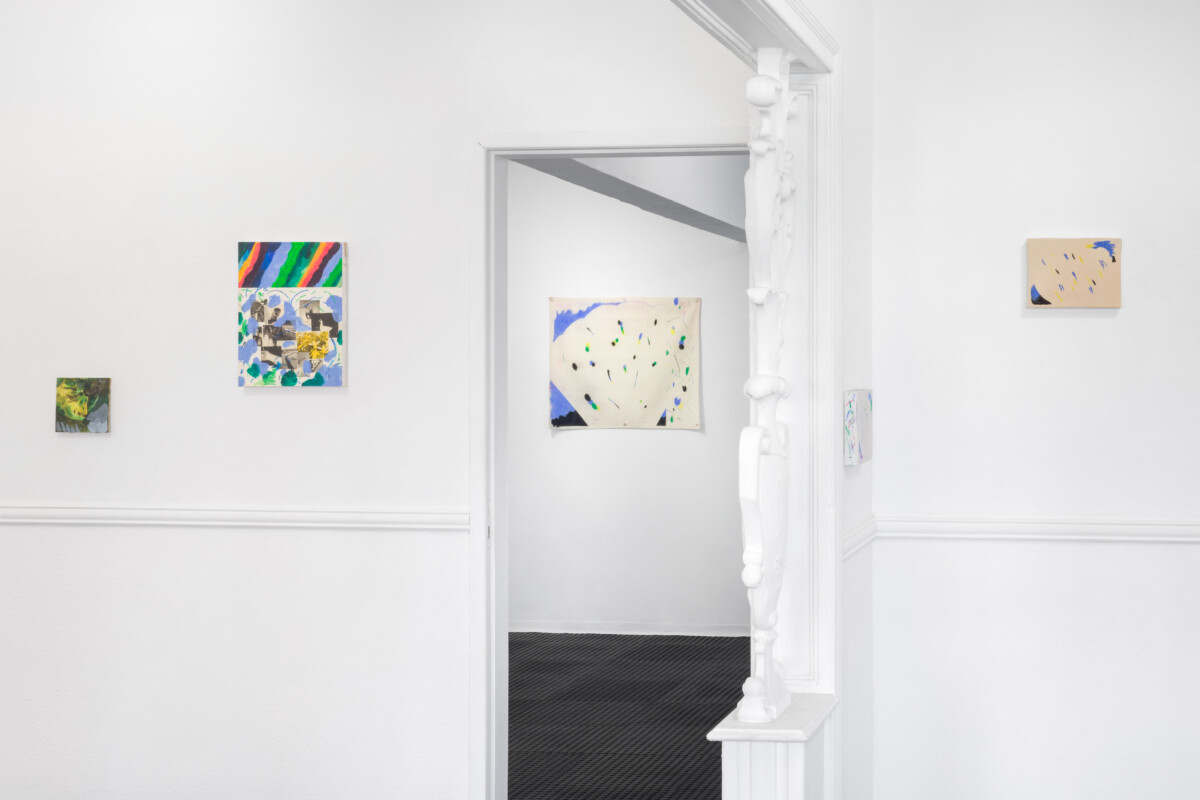
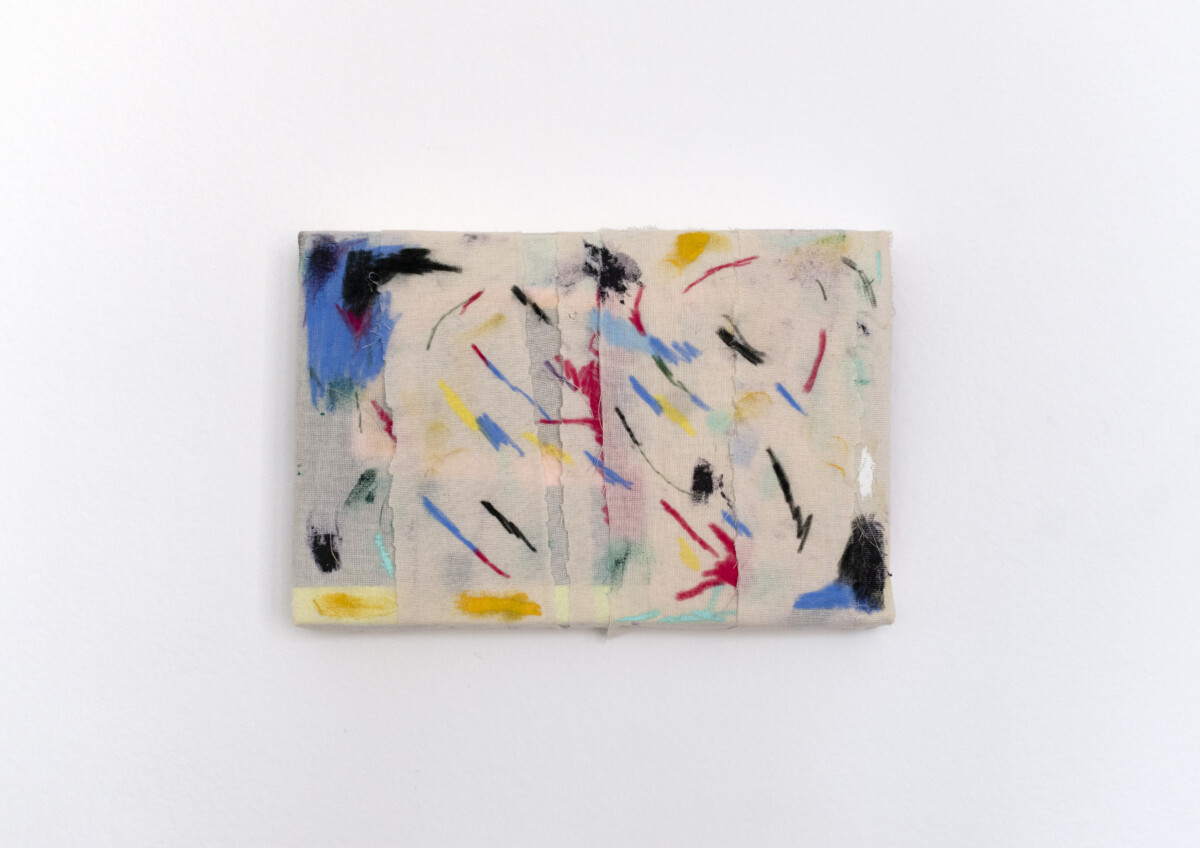
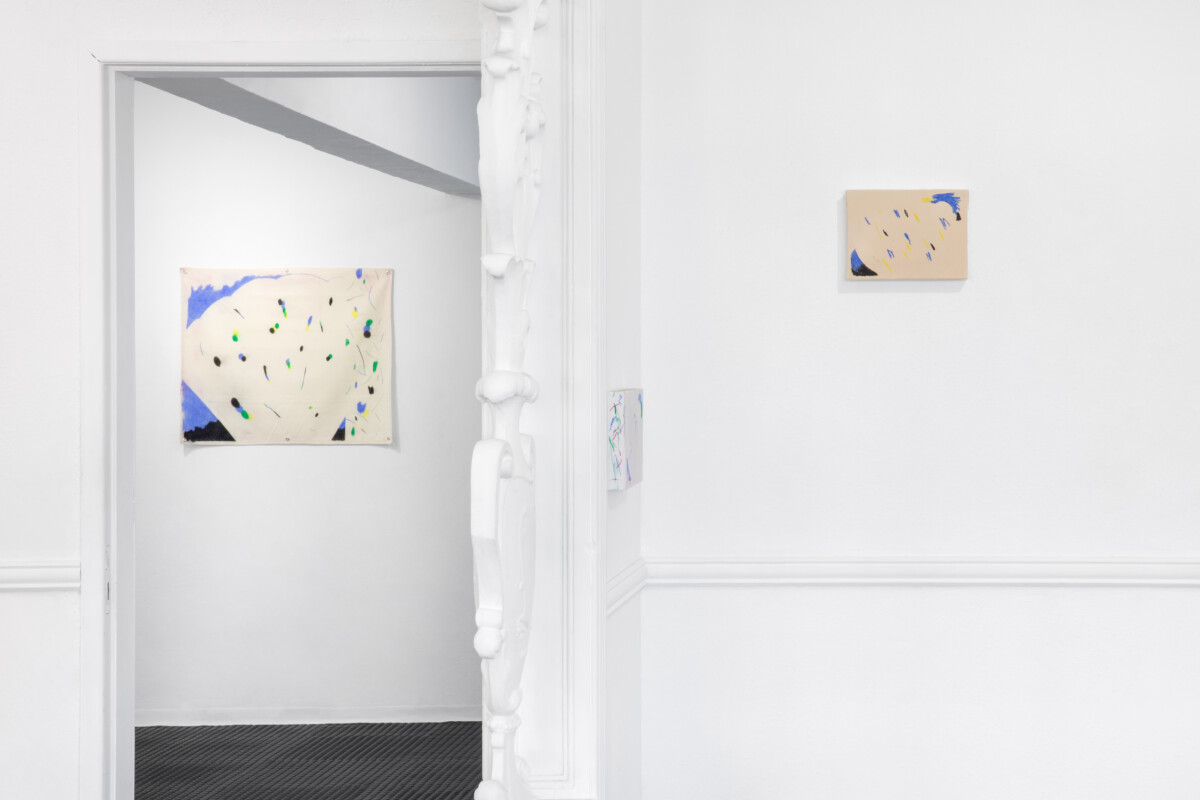
Estado de Engano was the first solo exhibition of Céu—a visual artist, curator, and researcher from Porto Alegre (RS)—and my second curatorial project at the independent space lapa, Lapain São Paulo (SP). Opened on June 13, 2025, the exhibition offered a retrospective of their recent production since 2022, highlighting the range of materials and techniques Céu employs—paper, fabric, chalk, paint, printmaking, metal, and more—always prioritizing the sensory materiality of the object over any image it might happen to depict.
Below, the curatorial text, translated from Portuguese, and some photos of the show.
Estado de Engano
trying to hold a linear, logical, or predictable thread of thought in conversation with Céu is to court failure (the present writer has learned this well). you soon understand that you’ll need to forego any pretense of control over the meaning of the words you utter: Céu will seize them, pry them open, knead and feel them from within, lay bare their innards and slice them into parts, only to hand them back to you, irrecognisable yet undeniably still there, in pieces, piece by piece, organ by organ – acting not as a coroner seeking a cause of death, causa mortisbut as a skilled butcher who presents you with the infinite variety of cuts at your disposal. you may cook exquisite dishes with such ingredients, or you may take offense because you had already warned them you are vegetarian and abhor meat. in any case, you won’t have much of a choice. any word is fair game for having its metaphoric, semantic, phonetic, or etymological polysemy stripped bare, made explicit. there is no barrier between literal and figurative. they’re just like that. in their own words:
Images were created to try to fix time or to return to a time. Words, in turn, were created to line images up, to organise them, to fix experience in time. The problem is that everytime we look at an image or read a word, it changes. We are going back not to the experience itself, but to its traces. And here, too, there is polysemy, ambiguity.
to observe Céu’s production and try to categorise it under the figurative/abstract binary is also a futile aspiration: she is not interested in rendering present (or representing) any signifier, but rather in exploring the traces that emerge from absence: an absence of the object, absence of commitment to the fidelity of original information throughout its transformations (from the world to film, film to photograph, photograph to print, print to drawing, drawing to painting, which is again part of the world, too), an absence of any predefined intention when producing a work. it is not a matter of pure formalist exploration, either. what matters is actually what springs from the process of working itself, and especially the perceptual effect created. as she puts it:
What am I doing? I trace a shadow, a corner, a remnant of an image. I bring them into the world through I feel at my fingertips, on the taste in my mouth, in the gesture of longing for what I have lost. I make possible the meeting between memory and matter. Is this love? It is my vengeance. My vengeance against forgetting, my vengeance against the enclosure of this world. It’s a chorus of my reflexes; it fits in my hands, in my palms.
in one of my first conversations with Céu we spoke about his gender expression – as transgender people, we are used to the mental confusion our bodies prompt upon cis people, but he manages to sow doubt even among our gender non-conformingpeers, who often have no idea what pronoun to use for him. of course, she says, it doesn’t matter, anything goes. pronouns have nothing to do with biology – and insofar as anyone who asks about that sign only wishes to know about the flesh, Céu keeps everyone in a perpetual state of mistake.
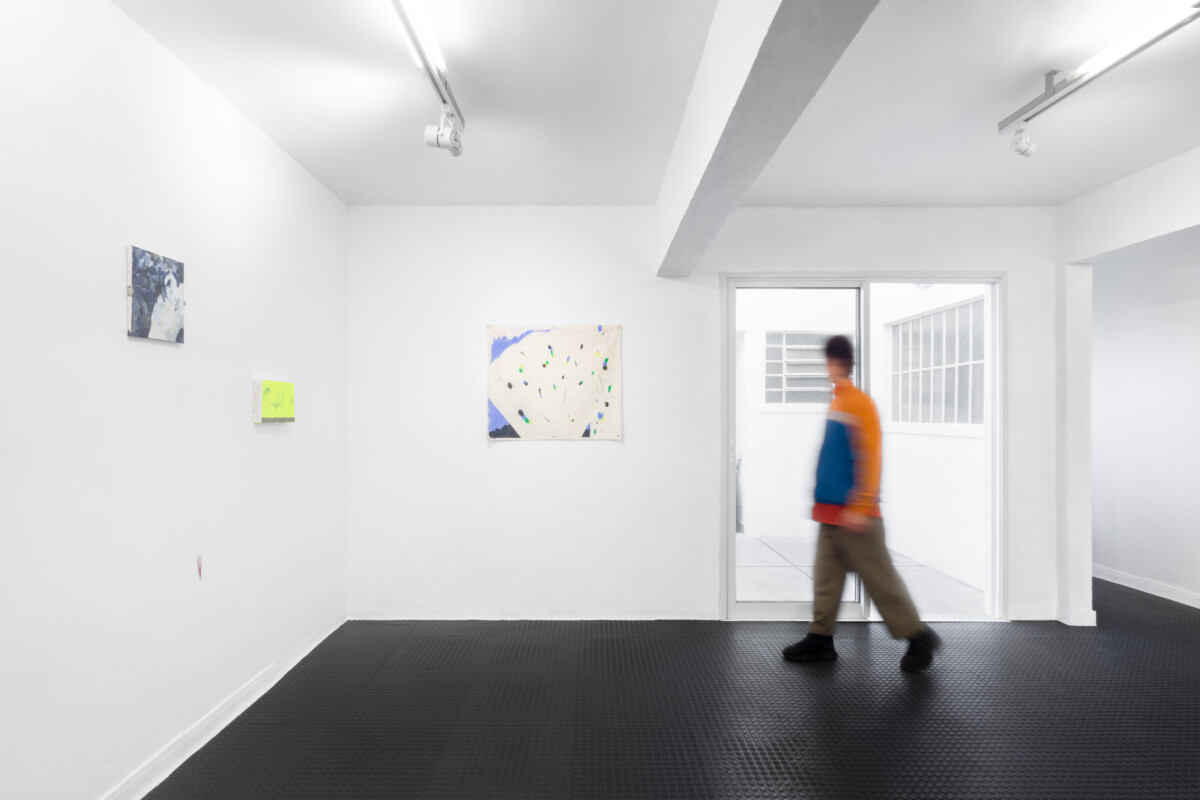
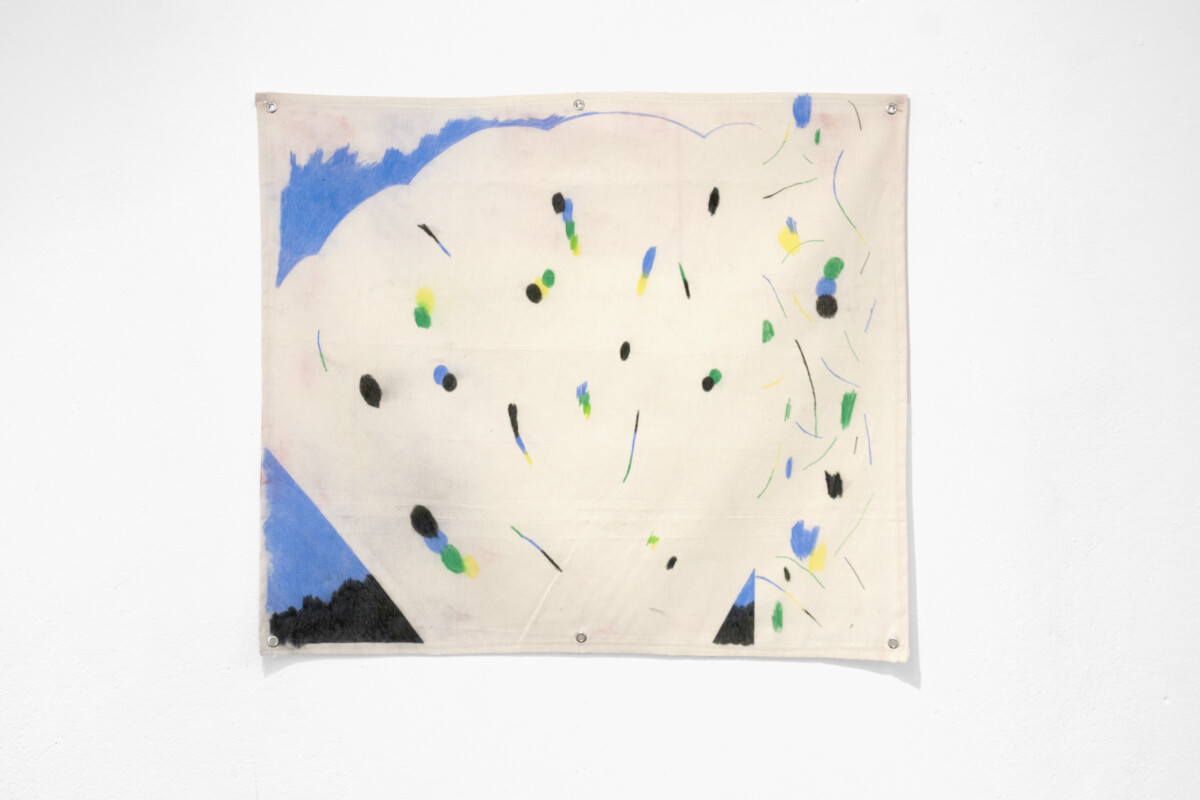
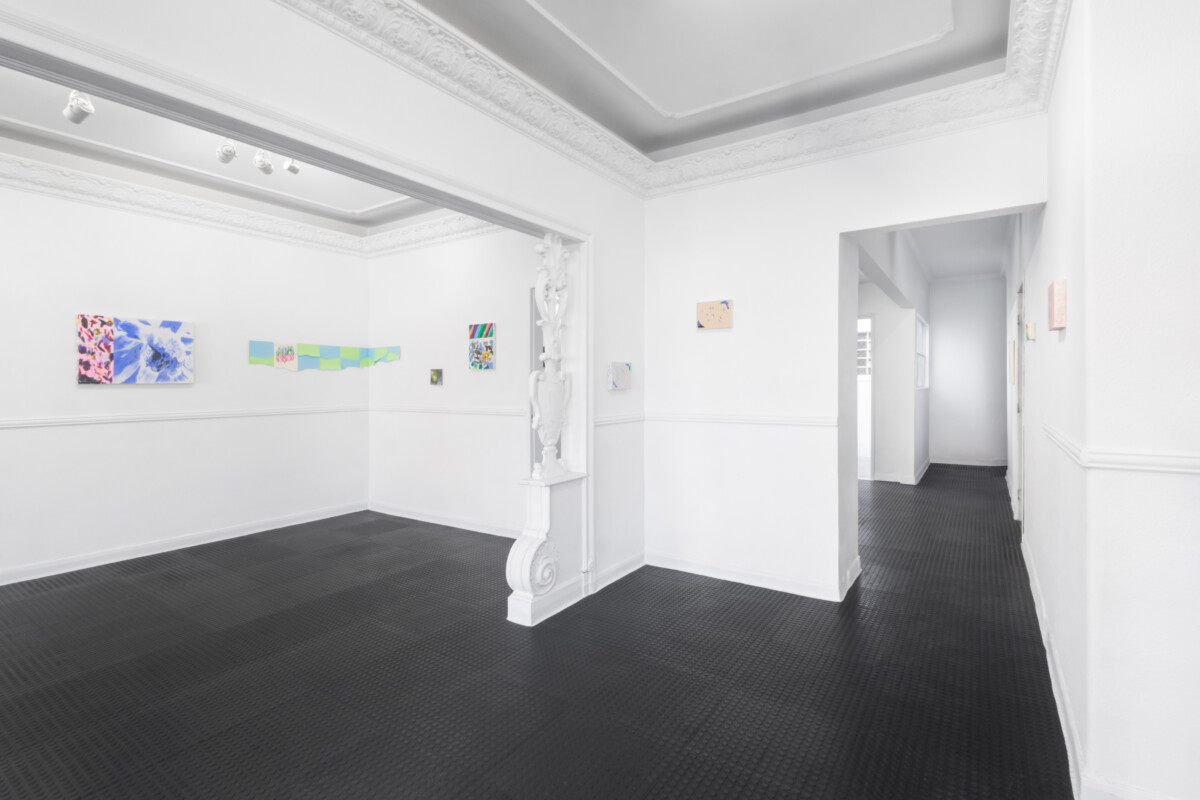
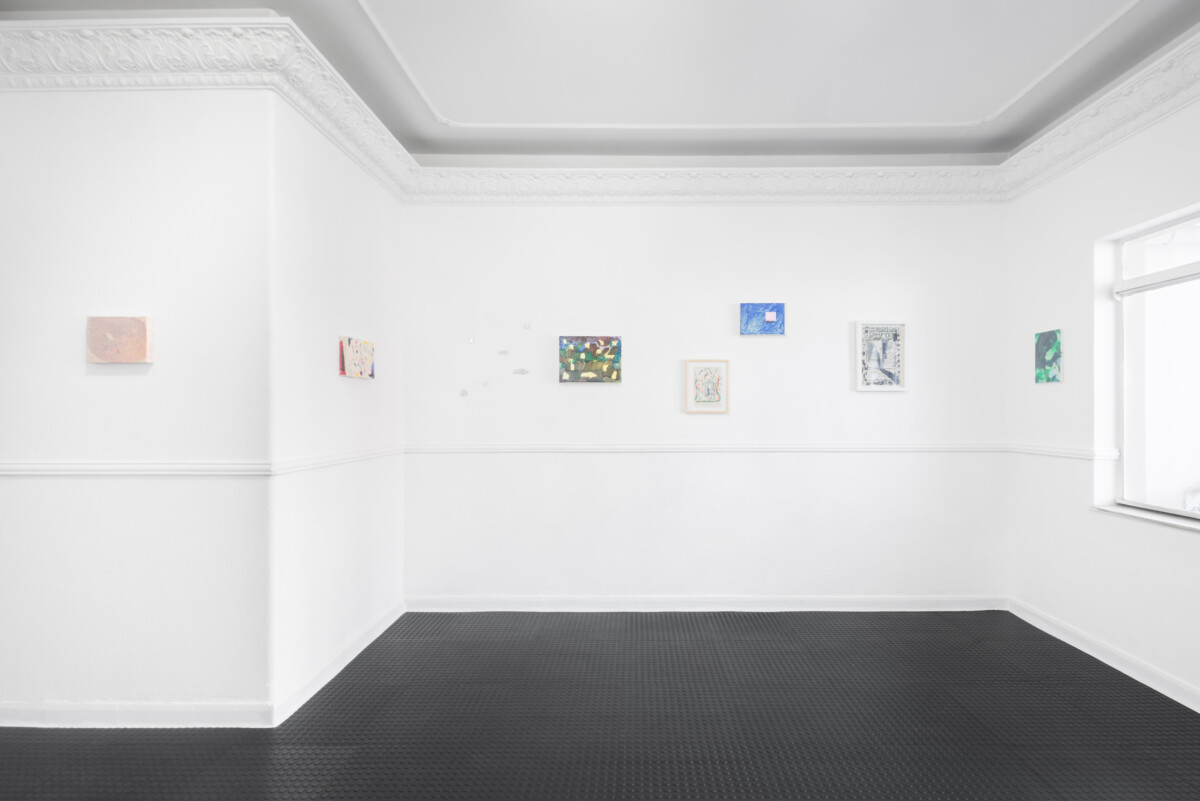
- activities: curation, text, exhibition design
- date June 13, 2025