
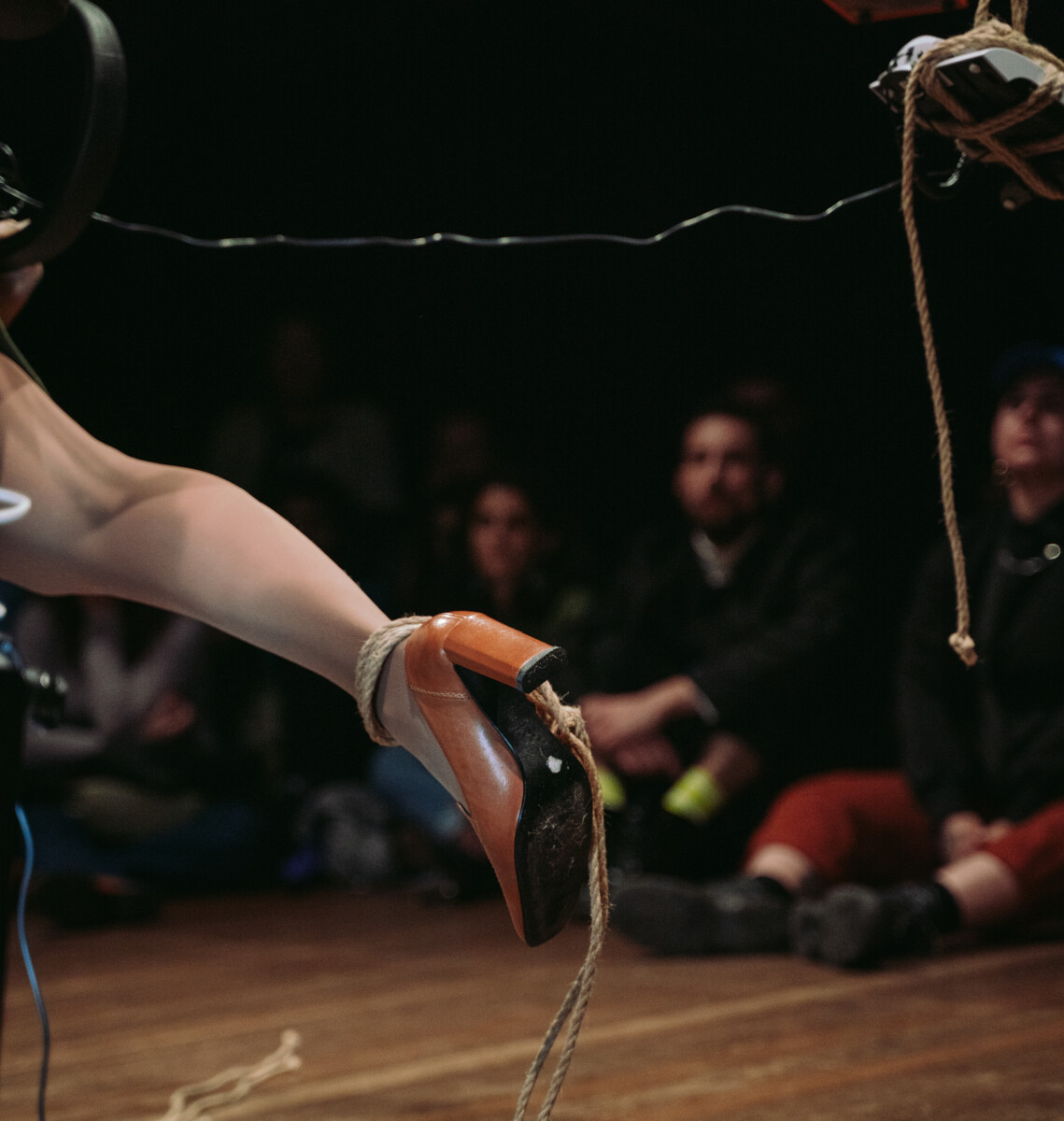
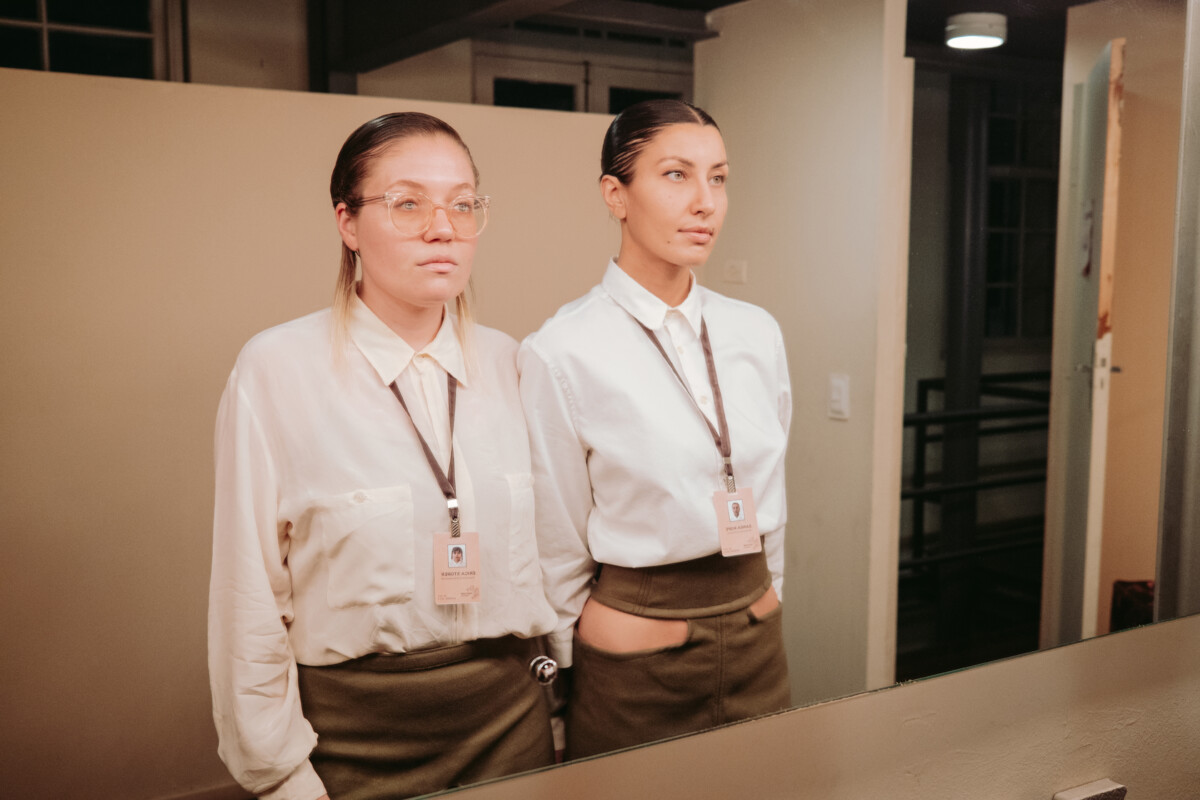
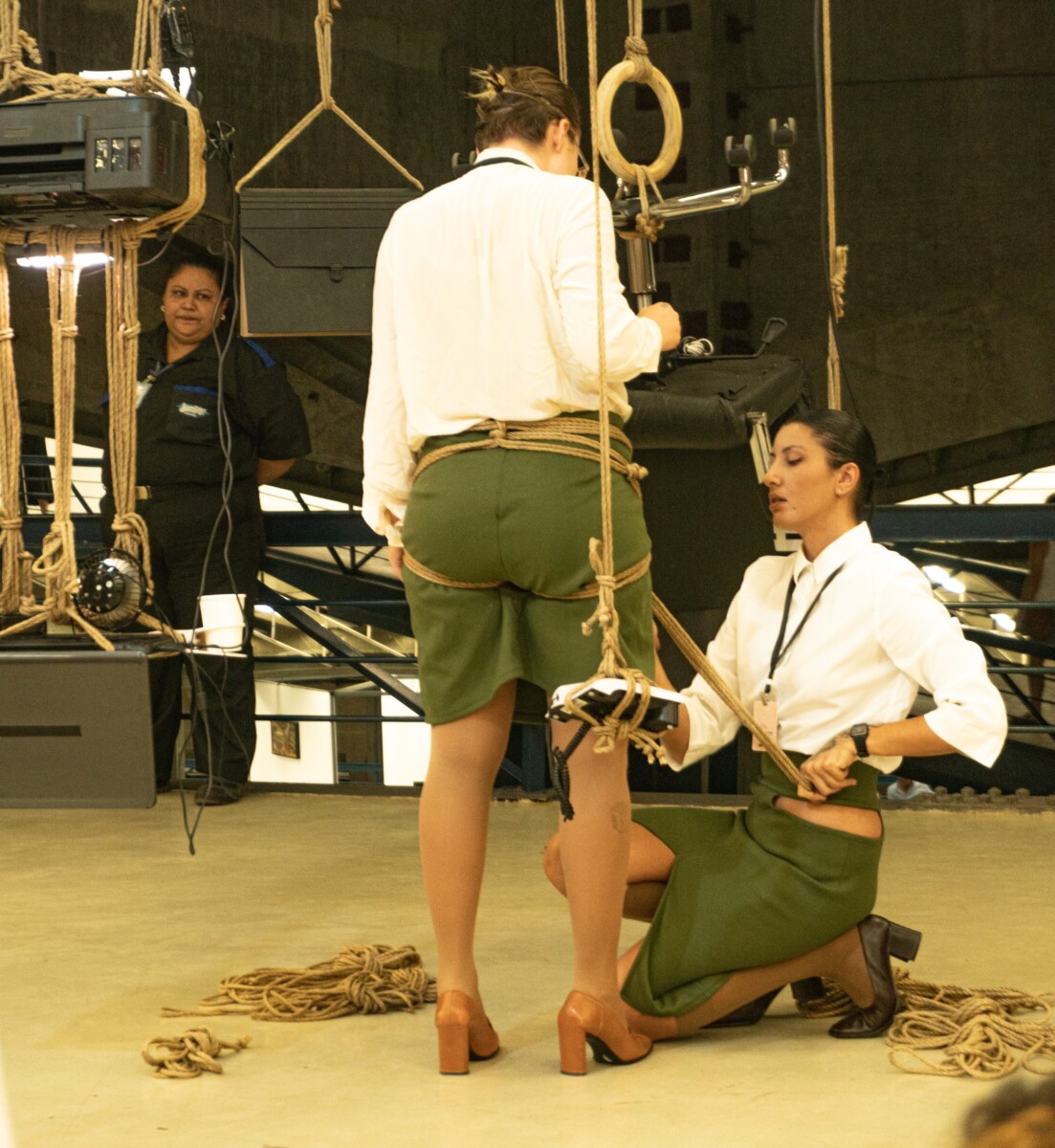
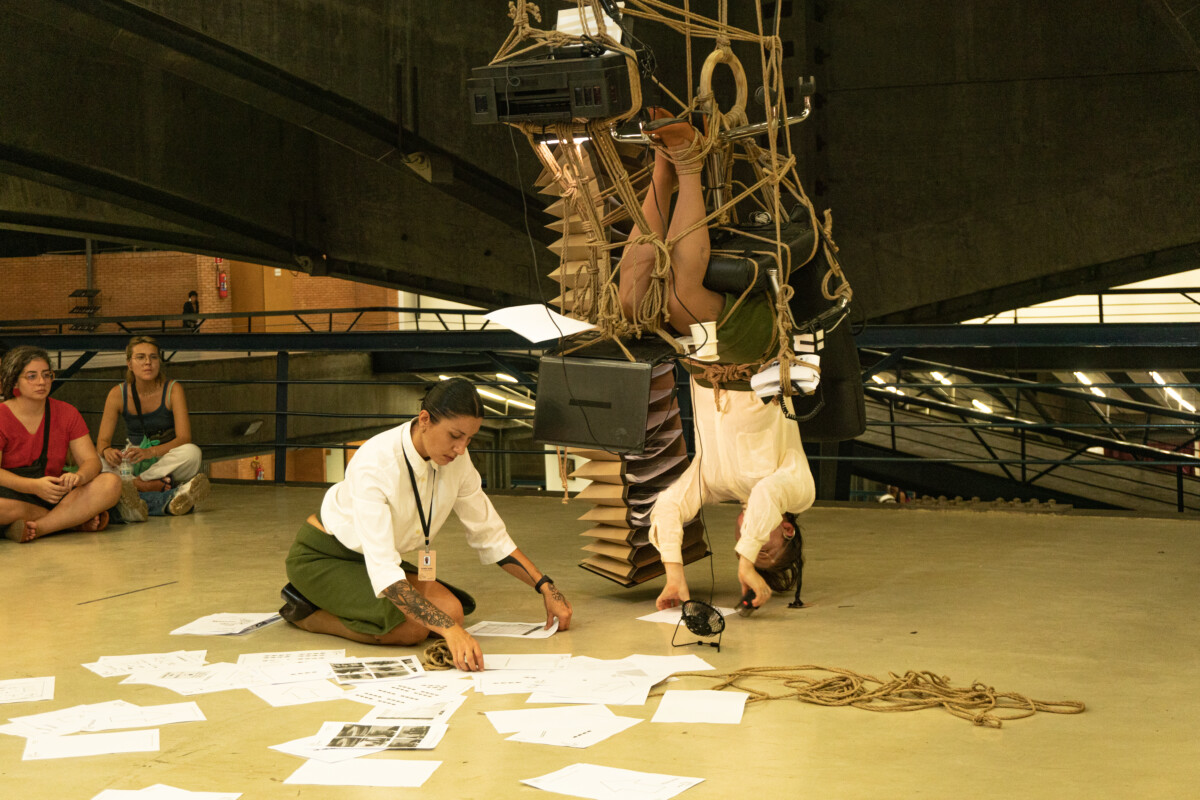
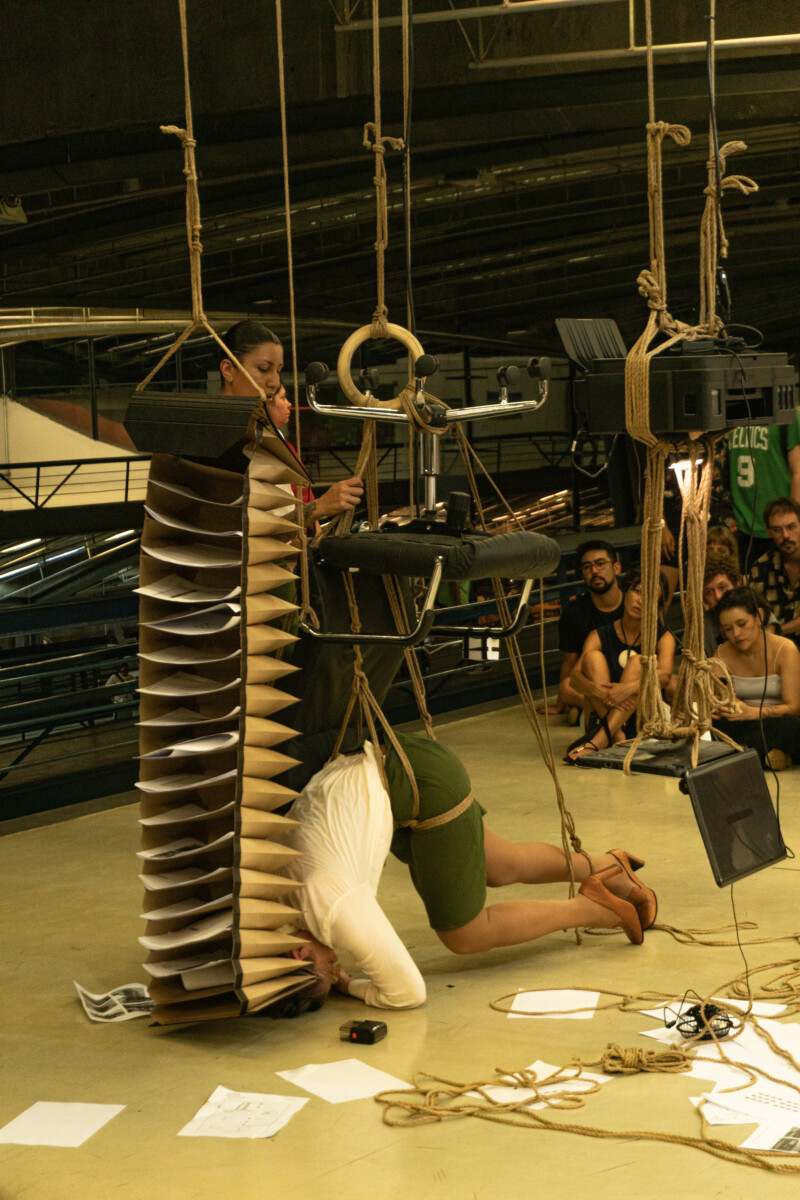
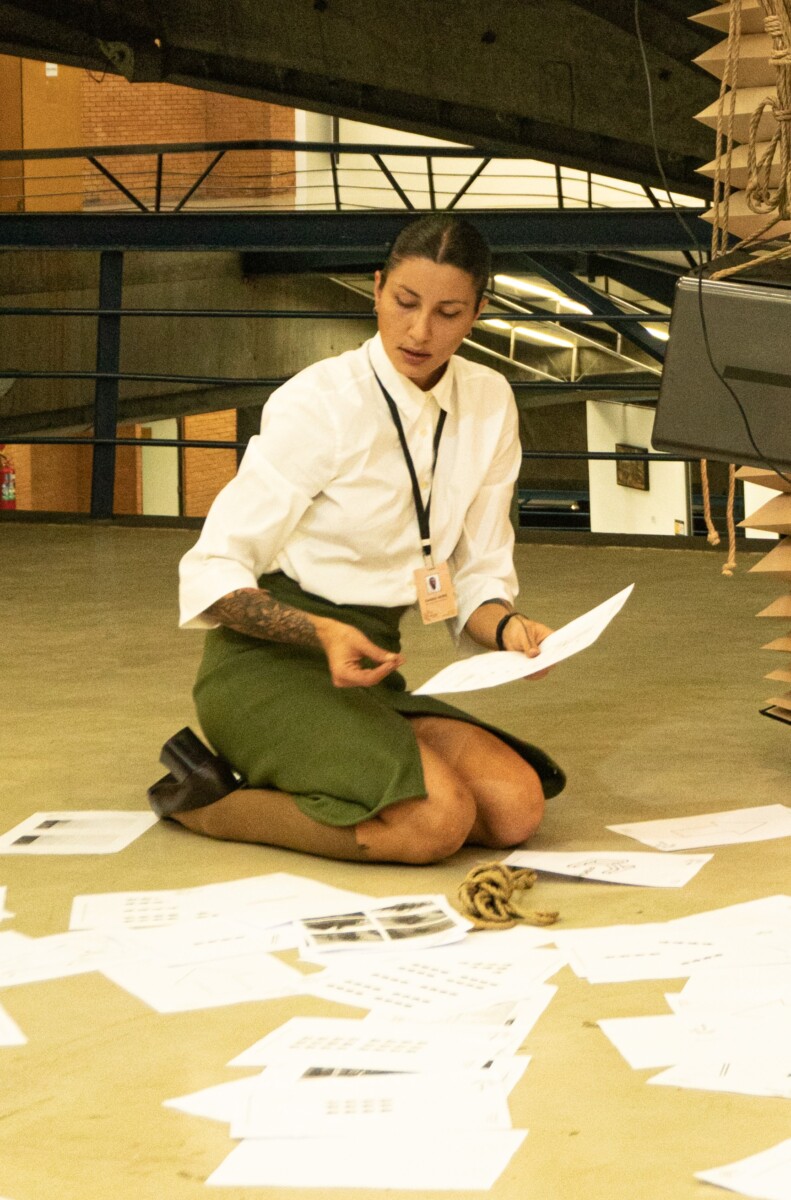
Na performance Há Quedas Por Vir, de Erica Storer e Sansa, as artistas utilizam a arte tradicional japonesa de amarração com cordas conhecida como shibari para desenvolver uma alegoria visual das restrições e da dominação inerentes à prática do trabalho. Assisti as artistas como curadora, no desenvolvimento da rotina performática e produzi um texto de acompanhamento.
The falls are here
Things used to be simpler. We divided ourselves into no more than two groups: some of us were responsible for gathering the grains and fruits that nature gave us without resistance, while others had to take by force the meat that insisted on fleeing from us. We were not many, but we were content. Once we finally conquered sedentarism, we created irrigated plantations, cornered our prey, and thus became prisoners of our own creation: in seeking to free ourselves from work, we created more work.
Originating in medieval Japan, the binding techniques used in the practice of what we now call "kinbaku" were employed primarily as a way to restrict the movement of prisoners, the jute ropes functioning as predecessors of modern metal handcuffs. It was not until the seventeenth century that constriction began to be explored as an erotic–aesthetic practice, which over time came to be recognized as its principal application. Therefore, although superficially unorthodox—since not primarily sexualized—the performance Há Quedas Por Vir (The vfalls are yet to come) brings back into view a usage of kinbaku much closer to its original purpose: after all, if there is something in common between prisoners and workers, it is the forced restriction of their freedom.
Constriction, however, does not appear here as an unfortunate consequence, but as an inherent part of what is deemed work: unlike in a punitive context, in Sansa and Erica’s performance, one worker restrains another worker, as a supervisor does to her subordinate—it is not only a matter of acting in unison to overcome fortuitous obstacles, but of exercising a degree of control over the other’s body that makes explicit—especially to the controlled—that power does not belong to them. It is not enough to produce, one must be dominated in the process. Yet, although a hierarchy is suggested—someone giving orders and another obeying them, one person tying and another being tied—there is no obvious relation of domination here: both work, both exert effort to the point of physical and psychological exhaustion, but in order to fulfill objectives that lie entirely outside their own desires or immediate needs. As in most contemporary work contexts, those who benefit from such objectives never appear on the scene. We have added many steps between ourselves and the grains that feed us, long ago exchanged in the form of futures and materialized in papers to be managed, catalogued, sold, and stamped.
The Falls in the title of the performance, in turn, allude to a second element: the worker is not only bound, but also suspended. Inverted like the tarot card, and with an equally (and forcibly) placid expression, she reminds us that the risk of falling—and of the potentially fatal consequences that follow from it—is not borne by the same people who reap the gains of suspension: as the many crises—economic, climatic, political—that we have gone through in recent decades teach us again and again, what is left to gravity’s fate is not capitalist profit, which is always duly protected, but workers’ lives: their health, rights, well-being, and very future. The falls have arrived.
- activities: assistência curatorial, texto
- date 2024